


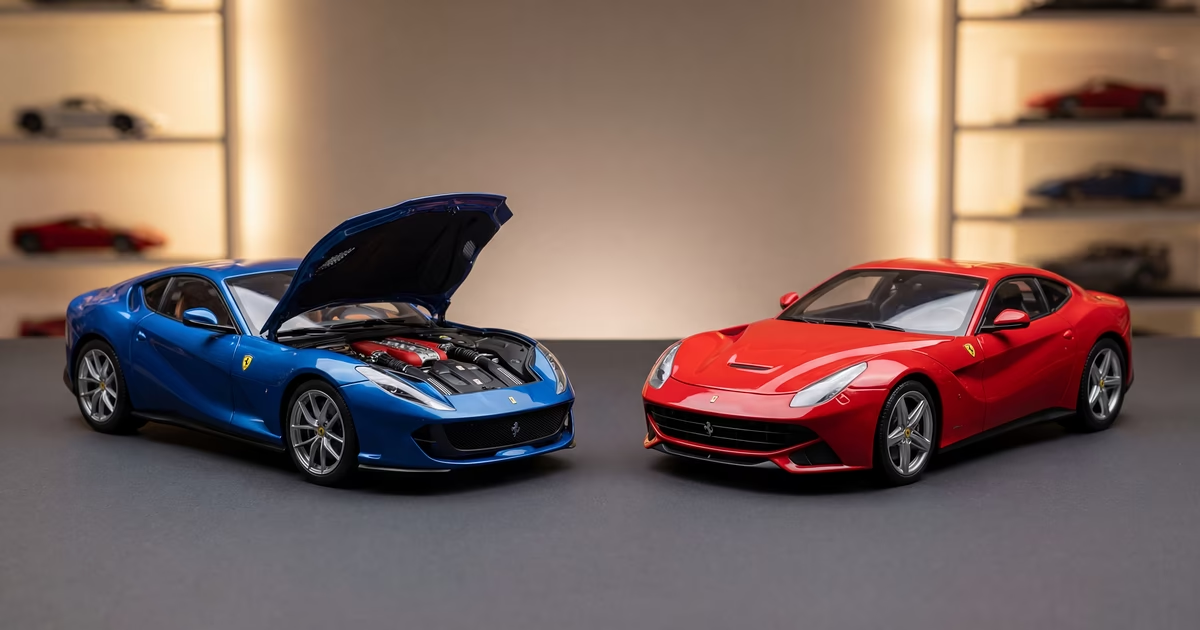
Pick up a 1:18 diecast model and it’ll weigh somewhere between 800 and 1,200 grammes. Set it down and grab the resin version of the same car. You’re holding barely half that weight, the finish looks different, the doors don’t open, and the price tag is often double. For collectors exploring resin model cars alongside traditional diecast, these differences aren’t obvious from product photos alone. They only show up once you’ve spent the money.
We’ve handled thousands of both types across our catalogue of 31,000+ scale models. This guide breaks down what actually separates diecast from resin so you can pick the right one before checkout. If you’re curious about composite and other construction methods too, our complete model car materials guide covers the full picture.
Quick Comparison: Diecast vs Resin at 1:18 Scale
Diecast and resin differ across seven fundamental characteristics. According to GMInsights, the global die-cast toy vehicle market reached USD 3.9 billion, with collectors and hobbyists generating over 65% of specialised demand (Business Research Insights). Here’s how the two materials stack up.
| Feature | Diecast | Resin |
|---|---|---|
| Material | Zamak zinc alloy | Polyurethane resin |
| Weight (1:18) | 800-1,200 g | 300-500 g |
| Opening features | Doors, bonnet, boot | Sealed (no moving parts) |
| Body lines | Good | Sharper, crisper |
| Typical production run | 5,000-50,000+ | 500-3,000 |
| Price range (1:18) | £45-130 | £100-260 |
| Primary risk | Zinc pest (humidity >65%) | UV degradation (yellowing) |
Prices reflect our catalogue data for established producers at 1:18 scale.
What Are Diecast Model Cars?
Diecast models get their name straight from the manufacturing process. Molten zamak, a zinc-aluminium alloy that melts at 385-400°C, gets injected into steel dies under high pressure in as little as 0.01 to 0.2 seconds (KDM Fabrication). That rapid injection creates a rigid metal body sturdy enough to support working hinges, springs, and opening panels. The cars-and-trucks segment alone represents a USD 1.99 billion market (GMInsights).
What does that mean in your hands? Heft. A 1:18 diecast Porsche or Mercedes tips the scales at 800-1,200 g. You can swing open the doors, lift the bonnet, peer into a detailed engine bay. It’s an interactive experience. From our experience, that satisfying weight and the faint metallic ring when you tap the roof are what hook most first-time buyers.
Established diecast producers include Norev (1:18 and 1:43, opening features across a wide range of car marques), Solido (1:18 with opening parts at an accessible price point), and IXO Models (primarily 1:43, strong motorsport heritage). Minichamps also offers a diecast line with full opening features, though they produce resin models too, so it’s worth specifying which line you’re looking at. See our ranking of the top diecast brands for a deeper comparison.
What Are Resin Model Cars?
Resin scale models are hand-cast from polyurethane resin poured into silicone moulds. Those moulds typically last just 15-30 casting cycles, or up to 50-100 with careful maintenance (GD-Prototyping). That’s the fundamental reason resin model cars come in limited batches. It’s not a marketing gimmick. The tooling physically can’t produce more.
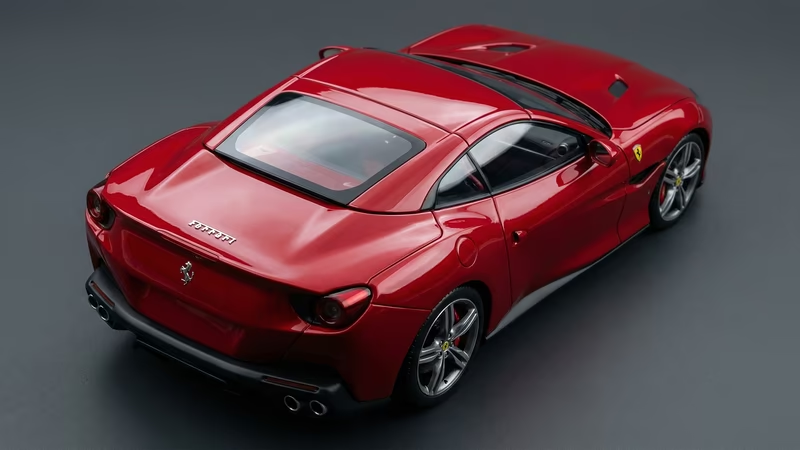
Production numbers tell the story. GT Spirit releases 1,500-2,000 pieces per 1:18 model. OttOmobile runs fall between 999 and 2,000, with their Toyota MR2 limited to 1,500 units and the Audi Quattro capped at 2,000 (DiecastSociety). BBR pushes exclusivity even further: their Ferrari Purosangue was limited to just 40 pieces (BBR). Every model is sealed. No opening doors, no lift-up bonnet. But that sealed body is exactly why the panel lines look so crisp. Without hinges eating into the bodywork, proportions stay faithful to the real car.
Key resin producers include GT Spirit (1:18, sealed, individually numbered), OttOmobile (1:18, specialising in European cars), BBR (ultra-limited Italian heritage, Ferrari and Lamborghini specialist), and Ignition Model (Japanese producer, 1:18 sealed limited editions). Minichamps’ resin line also fits here: sealed bodies, limited runs, distinct from their diecast offerings.
Detail and Finish: How They Compare
In a side-by-side comparison at 1:18 scale, resin models show visibly tighter panel gaps and smoother curves. Silicone moulds capture finer geometry than steel dies can reproduce under injection pressure. You’ll spot it on compound curves like a Porsche 911’s roofline or the wheel arches on an AMG GT.
Paint and Surface Finish
Resin pieces are hand-finished individually. Each one gets inspected and touched up before boxing. Does that make them flawless? Not always. But there’s more quality control per unit than you’d find on a production run of 20,000 diecast models where automated spray painting handles the bulk. The difference becomes most obvious on large, flat surfaces in metallic colours. A GT Spirit 1:18 in silver tends to show fewer micro-imperfections on the bonnet than a comparable diecast from a mid-range producer.
Interior and Engine Detail
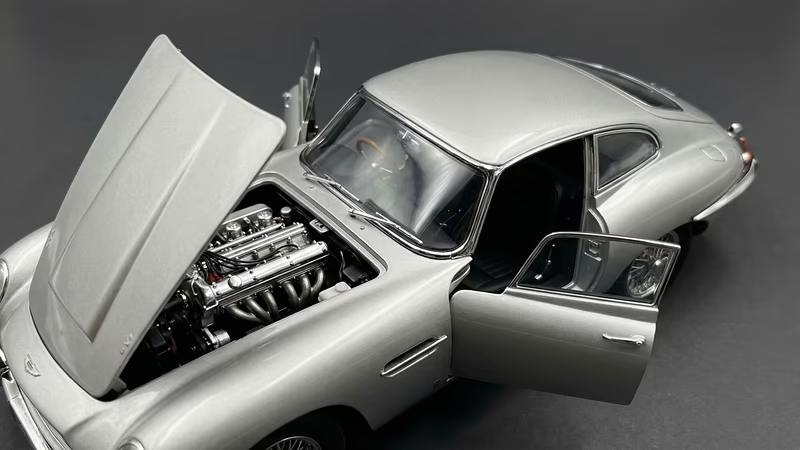
Here’s where the philosophies genuinely diverge. With diecast, you swing the door open, lean in, and examine the dashboard stitching or the engine valve covers. Take a Norev Mercedes-AMG GT 1:18: the engine bay includes individually moulded cam covers and intake runners, with printed lettering on the rocker cover. It’s a tactile, layered discovery. Resin? You’re looking through the windows. The interior might actually be sharper because the moulding process captures finer geometry when there are no mechanical constraints from hinges. But you’ll never touch it.
Which approach appeals more depends entirely on how you interact with your collection. We’ve noticed many buyers start with diecast for the hands-on thrill, then gradually add resin pieces once their focus shifts towards display accuracy.
Durability, Weight, and Care
A 1:18 diecast model weighs roughly twice as much as its resin equivalent: 800-1,200 g versus 300-500 g. That heft translates directly into shelf stability. Knock a diecast model accidentally and it’ll likely stay put. A lighter resin piece might not.
Handling and Weight
Both materials survive normal handling without issues. You can pick them up, rotate them, set them back down. The real difference surfaces with accidents: a fall from shelf height, a bump whilst dusting. Diecast’s metal body absorbs impact better. Resin can chip or crack if it hits a hard surface at the wrong angle. Neither material is inherently fragile, but resin demands a bit more mindfulness.
Long-Term Risks
Every material has a weakness. For resin, it’s ultraviolet light. Polyurethane yellows and becomes brittle under prolonged UV exposure (ResearchGate), with deformation starting around 50-60°C (Smooth-On). Never place a resin model in direct sunlight. For older diecast, the risk is zinc pest: an intergranular corrosion of the zinc alloy that develops in humidity above 65%, with symptoms becoming visible after a decade or more (Wikipedia). Modern zamak alloys have largely solved this, but vintage pieces remain vulnerable.
The takeaway? Both materials last decades in the right conditions. Keep humidity between 45-55%, avoid direct UV, and maintain a stable temperature. A display cabinet with silica gel packets handles most of this. For detailed storage and care advice, check our guide to displaying and protecting scale model cars.
Price and Value
Proper care keeps both materials looking sharp for decades. But the two differ quite a bit on the price side. At 1:18 scale, diecast models from established producers range from £45 to £130, whilst resin models typically cost £100 to £260. That’s not because polyurethane is inherently “better” than zinc alloy. The gap reflects economics: smaller production runs spread tooling and hand-finishing costs across fewer units. A silicone mould lasts 15-100 pours (GD-Prototyping); a steel die handles thousands.
Why Resin Costs More
Four factors drive the premium. The short mould life means tooling costs get divided among 500-3,000 units instead of 5,000-50,000+. Each piece requires individual hand-finishing and quality inspection, labour that scales linearly with output. Limited availability creates secondary-market demand once runs sell out. And the hand-painting step alone can take several hours per model, compared to seconds on a diecast production line. A Norev 1:18 Mercedes might sit around £50-70 at retail. A GT Spirit 1:18 Porsche typically lands between £130-175. BBR’s ultra-limited Ferrari editions, runs of 40-150 pieces, start closer to £220-260.
Value Retention
Sold-out resin editions often appreciate on the secondary market, especially when production ran below 500 units. Condition matters enormously: models with their original packaging can command a 20%+ premium over unboxed equivalents (Warwick & Warwick). Diecast models from mass runs hold their value steadily but rarely spike. The exception? Discontinued diecast from premium producers in mint condition. Those can surprise you.
Should you treat models as investments? Probably not as a primary goal. But if you buy what genuinely interests you, store it well, and keep the original box, the financial upside can be a welcome bonus over time. Browse our best diecast value picks for models with strong value retention.
Which Should You Choose?
For collectors building their first serious 1:18 display, diecast delivers more models per pound and the tactile appeal of opening features. Resin makes sense when body-line accuracy and limited-edition exclusivity matter more than interaction. Over 65% of collector demand targets specialised models (Business Research Insights), which means both materials have dedicated followings.
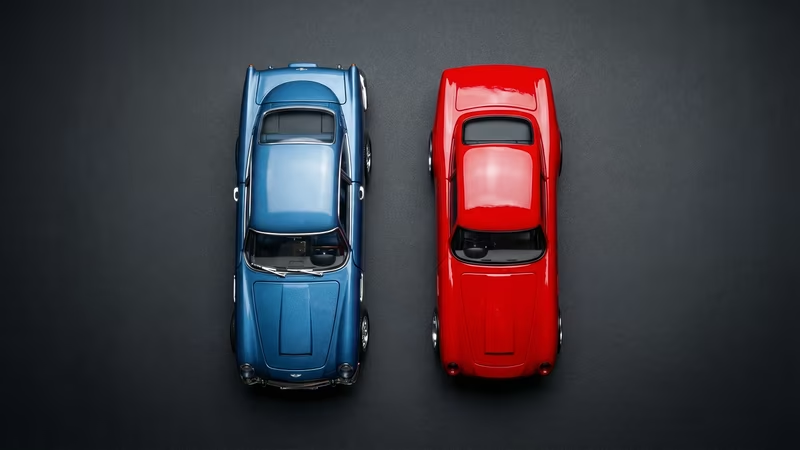
Here’s how it breaks down by collector profile:
- Budget collector (building a first collection) → Diecast. Wider selection, £45-130 per model, opening features included.
- Display purist (cabinet, no touching) → Resin. Sharper body lines, limited runs, gallery-level presentation.
- Interactive collector (opening, handling, exploring details) → Diecast. Hinges, moving parts, satisfying heft.
- Limited-edition hunter (exclusivity, potential appreciation) → Resin. Runs of 500-3,000 pieces, rising secondary-market values.
- Mixed collector → Both. Diecast for your everyday collection and hands-on pieces. Resin for the flagship display items you don’t touch.
There’s no wrong answer here. Plenty of serious collectors we work with own both, and they’ll tell you the two materials complement each other rather than compete.
FAQ
What is the difference between diecast and resin model cars?
Think of it like the difference between an aluminium laptop and a carbon-fibre one: same purpose, fundamentally different feel in your hands. Diecast uses zamak zinc alloy and gives you a heavy, interactive model with opening doors. Resin uses polyurethane and gives you a lighter, sealed piece with sharper body lines. The table above has the full breakdown.
Why are resin model cars more expensive?
It comes down to mould life. A silicone mould for resin wears out after 15-100 pours, so the per-unit share of tooling costs is much higher than diecast (where a steel die lasts thousands of cycles). Add individual hand-finishing on top and the price gap makes sense.
Can you open doors on resin model cars?
No. Resin models are sealed with no opening doors, bonnets, or boots. This isn’t a limitation; it’s a deliberate design choice. A sealed body preserves sharper panel lines and more accurate proportions because there are no hinge mechanisms cutting into the bodywork. Collectors who prioritise visual accuracy over interaction tend to favour this approach.
Are resin models more fragile than diecast?
Resin is more sensitive to UV exposure (causes yellowing and brittleness) and temperature swings above 50-60°C. Older diecast models face zinc pest risk at humidity levels above 65%. In day-to-day handling, both materials are durable. The key is controlled display conditions: stable temperature, moderate humidity (45-55%), and no direct sunlight. See our display and care guide for practical storage tips.
The Bottom Line
Diecast gives you a metal body, 800-1,200 g of satisfying weight, opening features, and a price range of £45-130 at 1:18 scale. Resin gives you polyurethane precision, limited runs of 500-3,000, sealed bodies with sharper lines, and a £100-260 price point. Neither is “better.” They serve different collecting philosophies. Many experienced collectors own both, using diecast for interactive display and resin for showcase pieces.
Ready to explore? Browse our diecast collection or discover resin models. And for the full breakdown of every construction method, composite, plastic, and beyond, visit our model car materials guide.