{"ajaxurl":"https:\/\/models118.co.uk\/wp-admin\/admin-ajax.php","nonce":"40459cb95a","homeUrl":"https:\/\/models118.co.uk\/","shopUrl":"https:\/\/models118.co.uk\/shop\/","collectionLimit":12,"i18n":{"addedToCart":"Added to cart","addedToWishlist":"Added to wishlist","removedFromWishlist":"Removed from wishlist","error":"Something went wrong","loading":"Loading...","outOfStock":"Out of stock","viewCart":"View cart","addedToCollection":"Added to Collection","reserved":"Reserved!","invalidEmail":"Please enter a valid email address","connectionError":"Connection error. Please try again."},"stats":{"models":552,"brands":31,"makers":11,"collectors":10000}}
<h1>Tuner Icons - JDM Legends and Modified Classics</h1>
<p>Tuner car models capture the golden era of Japanese performance culture, from Nissan Skyline GT-R and Toyota Supra to Mazda RX-7 and Honda NSX. Available from specialists like AutoArt, Otto Mobile, and Tarmac Works across 1:18 and 1:64 scales, serving collectors drawn to modified car culture and JDM heritage.</p>
Browse 3 Tuner Icons scale models — diecast and resin from leading manufacturers
What Tuner Icons model cars do you offer?
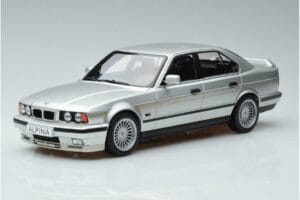
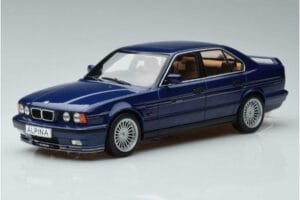
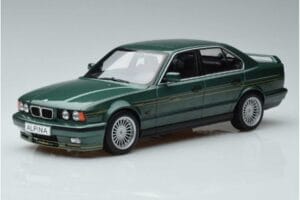
Our Tuner Icons collection features 3 diecast and resin scale models across all major scales and price ranges. Featured brands: BMW. New arrivals added regularly.
Which manufacturers make Tuner Icons models?
Tuner Icons models are produced by MCG, among others. Each manufacturer brings different strengths — from budget-friendly diecast to hand-finished resin limited editions.
What scales are available for Tuner Icons model cars?
Tuner Icons models are available in 1:18. The 1:18 scale (25-28 cm) offers the most detail; 1:43 is compact and ideal for larger collections.
Are Tuner Icons diecast models collectible?
Tuner Icons models are among the most sought-after in the hobby. Limited resin editions (under 3,000 pieces) appreciate after selling out. Key factors: production run size, manufacturer reputation, and the car's status among enthusiasts.
How to choose the best Tuner Icons model car?
For Tuner Icons models, choose your scale first — 1:18 for display impact, 1:43 for variety. Then compare materials: diecast for hands-on handling, resin for sharper detail. Solido and Norev for value, AUTOart for premium with opening parts.
Are Tuner Icons model cars good gifts for car enthusiasts?
Tuner Icons diecast models make memorable gifts for car enthusiasts. Choose 1:18 scale for maximum visual impact on the shelf. Look for models with opening parts for interactive display. Norev and Solido offer gift-ready quality in branded manufacturer packaging.
How are model cars shipped?
5-layer packing: original box, bubble wrap, foam inserts, reinforced carton, FRAGILE markings. All shipments tracked and insured. Damage rate under 0.1%.
Do you offer returns?
14-day returns on unused items in original packaging. Defective or damaged in transit? Free replacement — contact us with photos within 48 hours.
<p>Tuner car models preserve the counterculture legacy of Japanese performance engineering that defined 1990s and 2000s automotive enthusiasm, capturing the machines that proved aftermarket modification could transform affordable sports cars into supercar-hunting legends. From Nissan Skyline GT-R domination at Bathurst to Toyota Supra quarter-mile records, these replicas document the era when horsepower came from turbocharger upgrades and ECU tuning rather than exotic pedigree, creating collecting appeal rooted in Gran Turismo nostalgia, Fast and Furious cultural impact, and the enduring mythology of JDM engineering potential pushed beyond factory specifications.</p><h2>The Legendary Machines That Built Tuner Culture</h2>
<p>The Nissan Skyline GT-R lineage anchors tuner icon status through decades of motorsport dominance and modification potential that made "Godzilla" a global phenomenon. The R32 generation established GT-R legend by winning 29 consecutive Australian Touring Car Championship races between 1990 and 1992, combining the RB26DETT twin-turbo inline-six with sophisticated ATTESA all-wheel-drive that delivered traction advantages competitors couldn't match. Tuners discovered the RB26 responded to modifications with shocking reliability, with 1000+ horsepower builds becoming routine in specialist hands. The R33 and R34 generations refined this formula, with the R34 GT-R achieving automotive icon status through Gran Turismo 3 and Fast and Furious cultural saturation that introduced an entire generation to JDM performance philosophy.</p>
<p>The Toyota Supra, particularly the A80 fourth generation with its 2JZ-GTE engine, earned parallel icon status through drag racing dominance and the engine's legendary strength under boost pressure. While factory specifications delivered 276bhp constrained by the Japanese manufacturers' gentleman's agreement, the 2JZ's cast-iron block and robust internals meant tuners routinely extracted 800+ horsepower on stock bottom ends, creating a modification legend that persists decades after production ended in 2002. The Supra's long-hood, fastback proportions and those distinctive rear wing profiles make it instantly recognizable in replica form, particularly in the Ridox widebody configurations and vibrant early-2000s custom paint schemes that defined the era's aesthetic.</p>
<p>Honda's NSX represented the sophisticated end of tuner culture, where lightweight aluminum construction and naturally aspirated VTEC engineering created a different modification philosophy focused on chassis balance and throttle response rather than brutal turbocharged torque. While tuners did force-feed NSXs with considerable success, the car's appeal lay in its supercar-challenging dynamics straight from the factory, making it the thinking enthusiast's icon that demonstrated Japanese engineering could match Ferrari and Porsche at their own game. The pop-up headlamps and wedge profile remain distinctive in scale form.</p>
<p>The Mazda RX-7, particularly the FD generation, brought rotary power to icon status through its jewel-like 13B-REW twin-turbo that delivered turbine-smooth power in flowing bodywork penned by Tom Matano. The RX-7's lightweight construction and perfect weight distribution made it a canyon-carving legend, while rotary tuning culture developed its own specialized knowledge around apex seal reliability and porting strategies that conventional piston engines never required. The sequential twin-turbo system's complex vacuum-actuated transitions gave the FD a unique powerband character that tuners either preserved or bypassed entirely with single-turbo conversions chasing four-figure horsepower.</p>
<p>Subaru Impreza WRX STI and Mitsubishi Lancer Evolution models created the four-door performance icon category, where rally-bred turbocharged all-wheel-drive sedans delivered supercar acceleration in practical packages that could carry families during the week and dominate track days on weekends. The Colin McRae-era Impreza in signature blue with gold wheels became as recognizable as any exotic, while the Evo's aggressive front end and massive rear wing signaled performance intent that modification culture amplified with aftermarket turbochargers, intercoolers, and suspension geometry changes that pushed these rally refugees into dedicated track weapons. These machines defined the "sleeper" aesthetic where understated exteriors concealed devastating performance.</p><h2>Manufacturer Coverage for Modified Car Replicas</h2>
<p>Tuner car model production concentrates among manufacturers who understand modified car culture and deliver replicas capturing both factory specifications and the aftermarket modifications that defined these machines in enthusiast hands. AutoArt leads premium coverage with opening-feature 1:18 scale replicas of Skyline GT-Rs across R32, R33, and R34 generations, Supra A80 variants, and NSX examples that include factory-correct details like the Skyline's multi-link rear suspension visible through opening boot lids and accurate ATTESA controller units positioned between front seats. AutoArt's attention to under-bonnet detail matters particularly for tuner icons where engine bay modifications represent significant collecting interest, with RB26DETT and 2JZ-GTE engine recreations capturing the factory engineering that made these power plants modification legends.</p>
<p>Otto Mobile specializes in modified car replicas through sealed resin construction that captures lowered ride heights, aftermarket wheel fitments, and body kit additions that defined tuner aesthetics. Otto's collaboration with tuning magazines and modification specialists produces replicas of specific builds that achieved magazine feature status or represented milestone modifications in tuner culture, from RE Amemiya RX-7s with full aero packages to HKS-tuned Skylines wearing the specialist's signature blue and silver livery. The sealed resin format allows Otto to capture the aggressive stance and wheel positioning that modified cars achieve through coilover suspension and wheel spacers, details that opening-feature diecast manufacturing struggles to replicate accurately.</p>
<p>Tarmac Works brings Hong Kong tuner culture perspective to 1:64 scale with extensive JDM coverage that includes both factory-specification icons and modified variants wearing period-correct aftermarket wheels from Work, Rays, and BBS. Their "Global64" range systematically documents tuner legends across multiple generations and specifications, from bone-stock R34 GT-Rs to Nismo-kitted examples, creating comprehensive collecting potential in compact format. The 1:64 scale enables collection breadth that larger formats cannot match, with complete Skyline GT-R evolution displays or full Impreza STI generation coverage remaining practically displayable where 1:18 equivalents would demand dedicated furniture.</p>
<p>Kyosho delivers solid mid-tier 1:18 and 1:43 coverage of JDM icons with particular strength in Skyline GT-R documentation across generations, including both road-going specifications and JGTC/Super GT racing variants that show these platforms' competition application. Inno64 and Mini GT expand affordable 1:64 options with modified car focus, both offering tuner-oriented releases with aftermarket wheel styles and lowered stances that capture modified aesthetics at accessible price points. Ignition Model represents the Japanese premium resin tier, producing highly detailed 1:18 and 1:43 replicas of tuner icons in specific configurations that include rare factory colors and limited production variants that command collecting premium based on specification accuracy and production limitations.</p><h2>Building a Tuner Icon Collection</h2>
<p>Collecting tuner icons naturally organizes around several thematic approaches that reflect how enthusiasts connect with modified car culture. Generation-complete collections document individual model lineages across their production evolution, such as comprehensive Skyline GT-R coverage from R32 through R34 showing how Nissan refined the GT-R formula across the 1990s, or Supra lineages from A70 through A80 demonstrating Toyota's sports car development. This chronological approach suits collectors interested in engineering progression and how each generation addressed the previous model's limitations while maintaining the characteristics that made the original iconic.</p>
<p>Era-focused collections concentrate on specific periods that defined tuner culture peaks, particularly the 1995-2002 golden era when all major Japanese manufacturers competed in the performance segment simultaneously. A late-1990s JDM collection might include R34 Skyline GT-R, A80 Supra, FD RX-7, NA2 NSX, GC8 Impreza STI, and Evo VI, creating a display that captures the moment when Japanese engineering challenged European exotics across performance metrics from the Nürburgring to drag strips worldwide. This approach works particularly well at 1:64 scale where the full competitive landscape fits standard display cases.</p>
<p>Modification-stage collections track individual models from factory specification through progressive modification levels, showing the same chassis in bone-stock form, lightly modified with common upgrades like exhaust and suspension, and finally full-built specification with turbo upgrades and complete aerodynamic packages. This approach demonstrates the transformation potential that made these machines tuner icons, though it requires manufacturers offering the same model in multiple specifications. Otto Mobile's modified car focus serves this collecting strategy well, with specific tuner builds from recognized modification shops providing documented examples of what high-level tuning achieved with these platforms.</p>
<p>Scale strategy for tuner icons differs from other categories due to the importance of aftermarket details and stance. The 1:18 format from AutoArt and Ignition Model captures engine bay details and interior modifications that matter to tuner enthusiasts who understand what distinguishes a stock Supra from a 1000bhp build, with visible intercooler piping, aftermarket turbochargers, and roll cage additions serving as collecting focal points. The 1:64 scale from Tarmac Works, Inno64, and Mini GT enables comprehensive coverage where cost per model allows collection breadth, with full generation runs and multiple color variants becoming practically achievable. Many tuner icon collectors maintain both scales, using 1:18 for hero cars that represent personally significant models or builds, while 1:64 handles systematic documentation of the complete JDM performance landscape that defined the modification era's depth and manufacturer diversity.</p>