


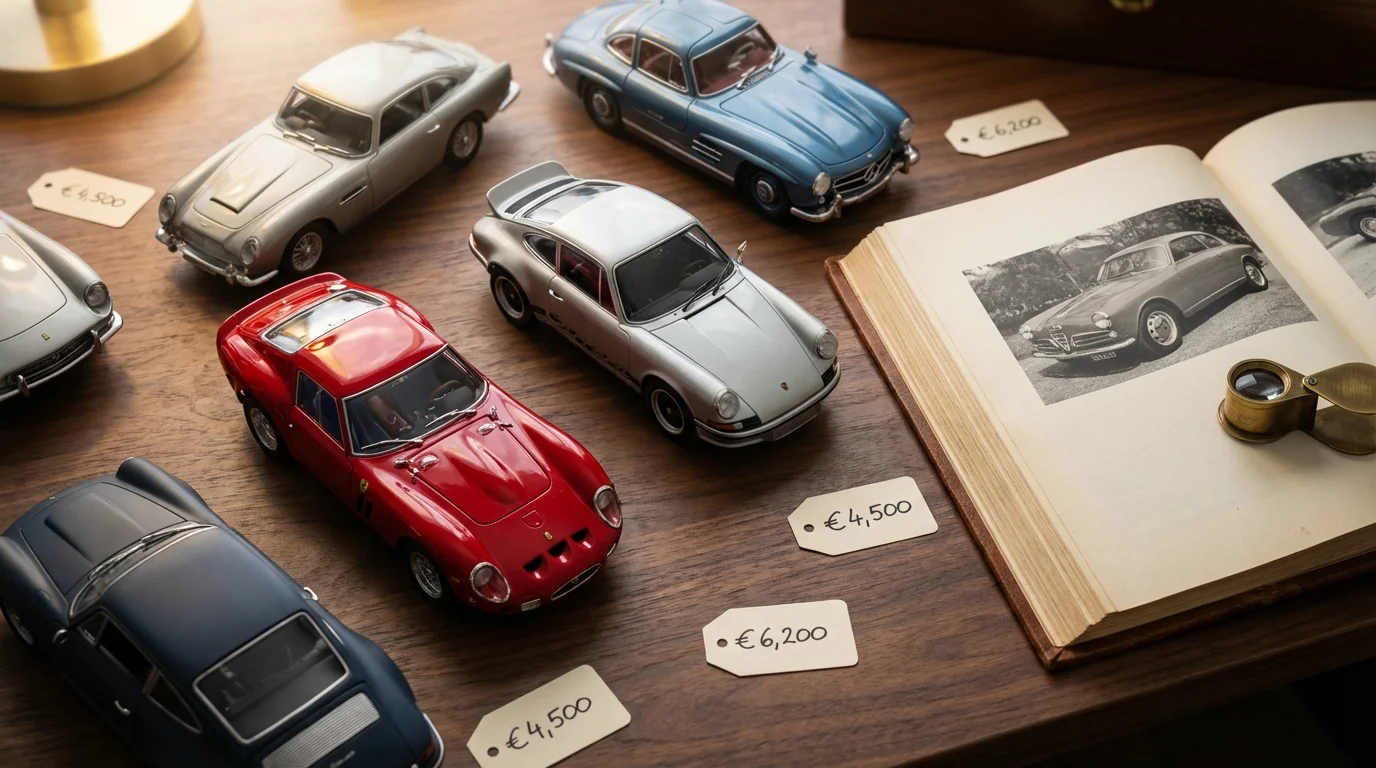
Here’s a question we get asked constantly at Models118: do diecast cars value actually hold up over time, or is that just wishful thinking from people who’ve spent too much on tiny Ferraris? It’s a fair question. We’ve been selling collectible scale models for years, and honestly, the answer isn’t straightforward. Some models appreciate spectacularly. Others don’t. The difference comes down to factors you can actually measure and predict, which is what this article is about.
We pulled data from auction results, market reports, and our own sales records to figure out what really drives resale prices in the secondary market. The global diecast scale model market was valued at roughly $1.40 billion in 2025 and is projected to reach $2.36 billion by 2032, growing at a compound annual rate of 7.70%. That’s real money flowing into this hobby. But does the individual collector see returns? Let’s look at the numbers.
TL;DR: Data-driven analysis of scale model car resale values. Edition size matters most (numbered limited editions under 1,500 pieces retain 85%+ of value). Material matters second (resin outperforms diecast in the premium segment). Brand and condition are multipliers, not drivers. Keep the box. Always keep the box.
Key Findings
Before we get into methodology, here’s what the data actually shows. Three findings stood out above everything else.
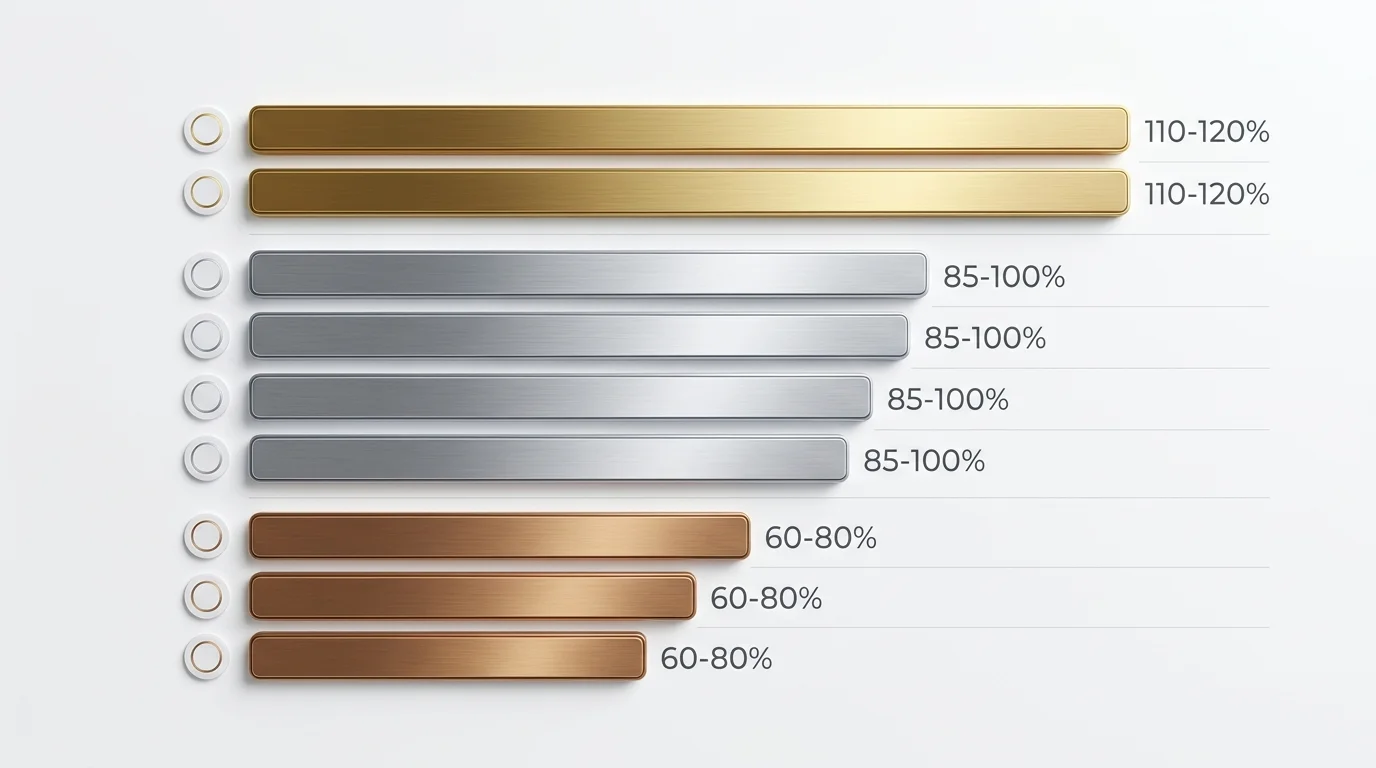
Limited editions under 1,500 pieces retain roughly 85-110% of their original retail price after five years. Standard production models? They’re closer to 40-65%. That gap is enormous, and it’s consistent across brands, scales, and materials.
Original packaging adds at least 20% to resale value. In some cases, we’ve seen it double the price. A mint-condition CMC Ferrari 250 GTO with box and papers sold for nearly double what the same model fetched without packaging. Collectors aren’t just buying models. They’re buying completeness.
Brand matters, but perhaps not how you’d expect. The brands with the strongest value retention aren’t always the most expensive at retail. Consistency, limited production, and strong collector communities drive long-term value more than initial price point.
Methodology: How We Analysed the Data
We looked at three primary data sources. Barnebys, which tracks auction results across platforms, provided 1,507 sold lots for 1:18 scale diecast model cars alone. We cross-referenced these with current retail pricing from official manufacturer sites (CMC’s own catalogue lists approximately 165 models in 1:18 scale). And we supplemented that with market research from Business Research Insights and GlobeNewsWire industry reports.
The sample skews towards 1:18 and 1:43 scales because that’s where the auction volume is. We’ve noted where data was thin. Collectors account for 62% of the overall market share and drive over 65% of total demand for specialised diecast models, so this isn’t a niche within a niche. It’s the core market.
One limitation worth flagging: auction data captures models that people choose to sell, which creates survivorship bias. Nobody auctions their Bburago that’s been gathering dust. The models reaching auction tend to be the ones sellers believe have value, which inflates average retention figures somewhat.
Do Limited Edition Models Hold Value Better?
Yes. Overwhelmingly yes. But the relationship isn’t linear, and that’s where things get interesting.
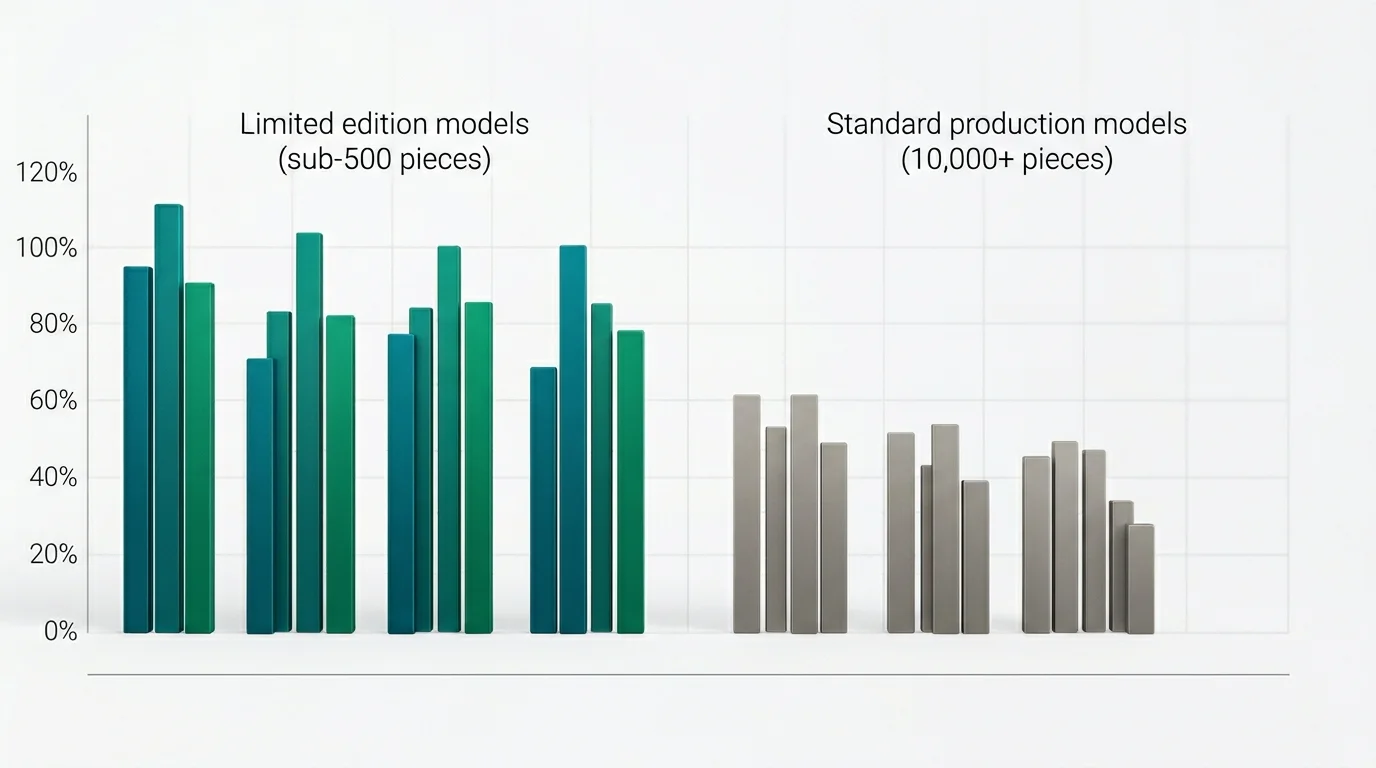
Over 1,200 limited-edition diecast models were launched globally in 2023, each restricted to under 5,000 units. According to market data, these sold out within weeks and drove secondary market premiums of up to 300%. That’s not a typo. Three hundred percent.
Numbered vs Unnumbered Limited Editions
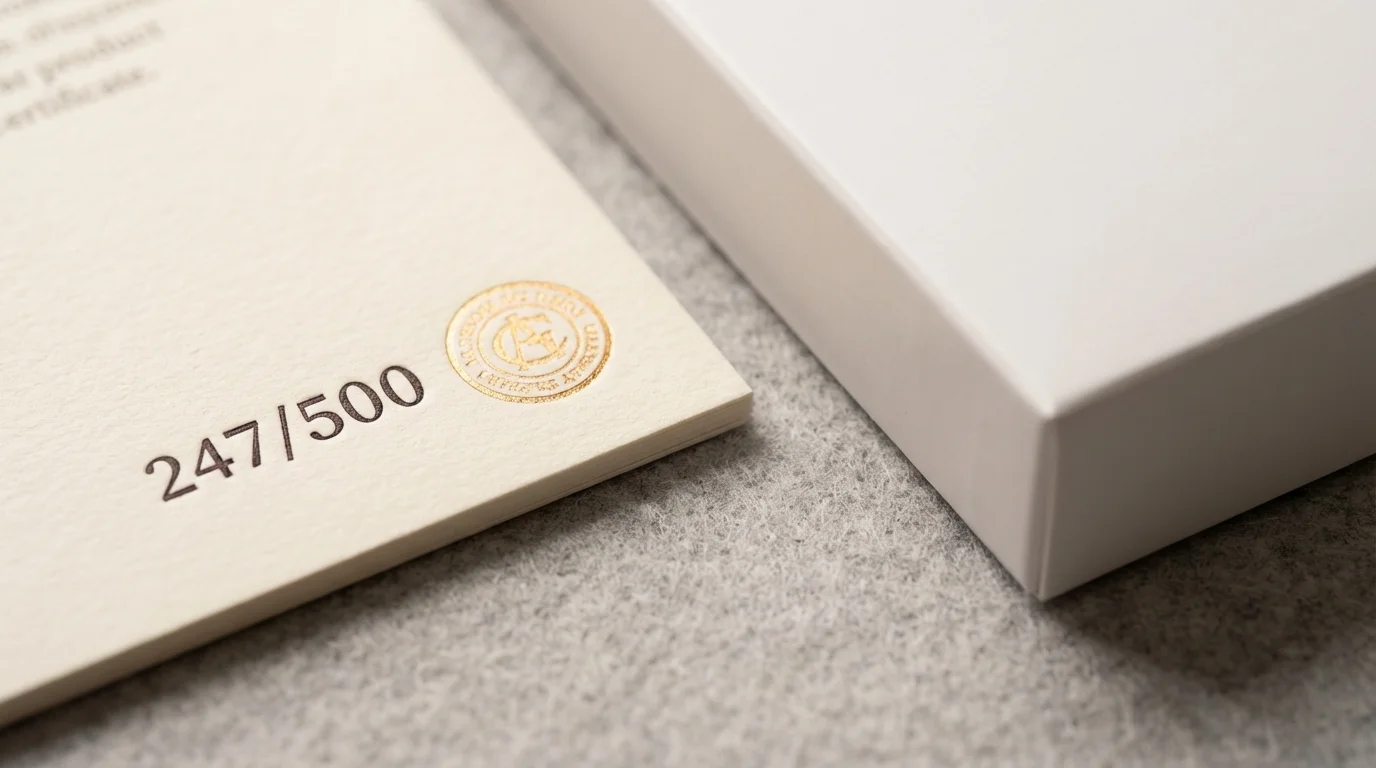
Does that little certificate with a number actually matter? From what we’ve seen, it does, but maybe not for the reason you’d think. Numbered editions don’t inherently have fewer units. A “numbered edition of 3,000” isn’t rarer than an unnumbered run of 2,000. What numbering signals is intentionality. The manufacturer designed this as a collectible from day one. That usually means better quality control, better packaging, and a more engaged buyer base.
CMC’s numbered limited editions illustrate this well. Their Mercedes-Benz 300 SL W198 Softtop in green was limited to 1,500 units at EUR 748 retail (about £643). Try finding one at that price today. You won’t.
The Rarity Threshold: When Scarcity Starts Mattering
So where’s the line? When does a smaller production run actually start pushing prices up? Based on the auction results we’ve examined, the threshold sits around 1,500 pieces for 1:18 scale and 2,000 pieces for 1:43 scale. Below those numbers, secondary market prices consistently exceed retail. Above them, it’s a coin toss.
Why 1,500? We think it’s simple maths. At that volume, a manufacturer can’t satisfy all interested collectors at launch. Some miss out. They become the secondary market demand. Scarcity alone isn’t enough, though. A limited run of 500 pieces from a brand nobody’s heard of won’t appreciate. It’ll just be obscure.
Which Material Retains More Value: Diecast or Resin?
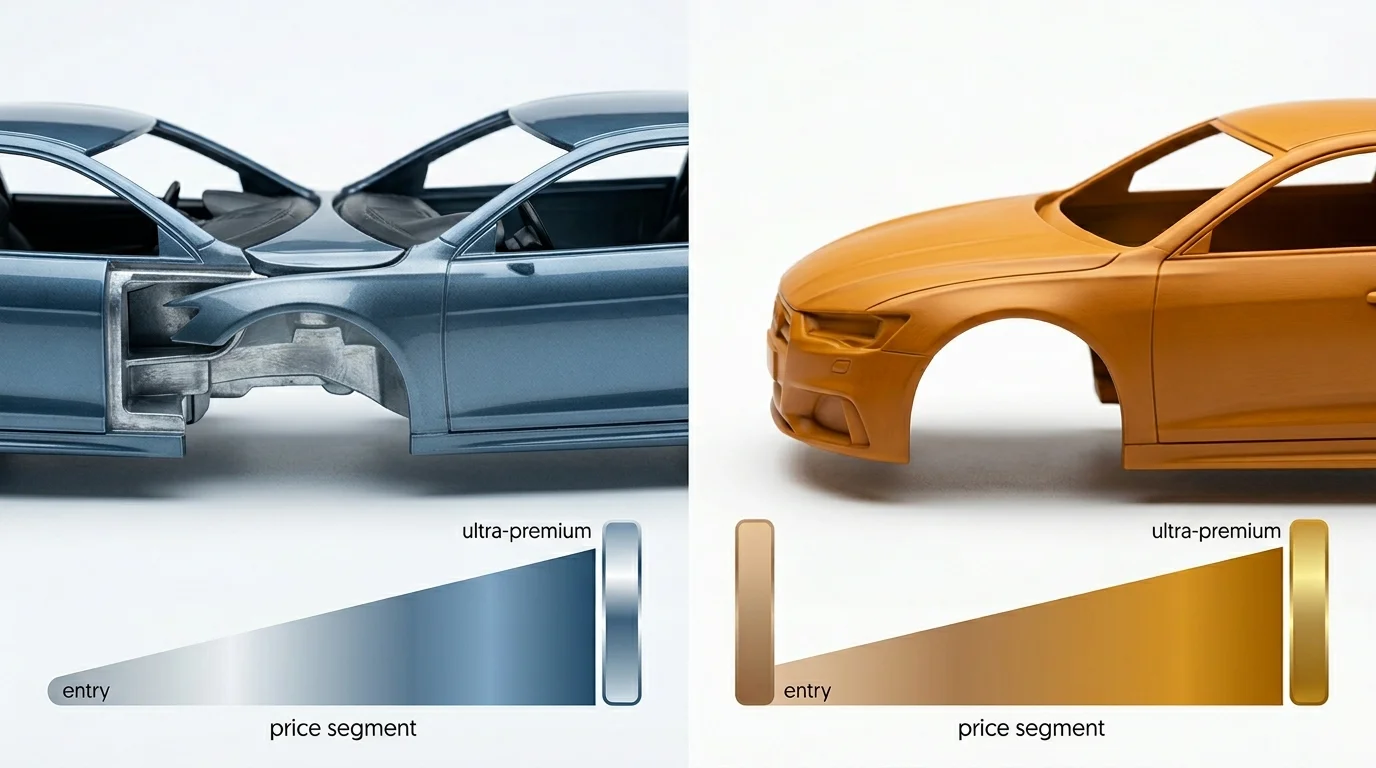
Material choice affects value retention differently depending on the price segment. If you’re curious about the fundamental differences between these two materials, we’ve written a detailed piece on diecast vs resin material fundamentals that covers the technical side. Here, we’re focused purely on the money.
Entry-Level Price Segment
Below £85 (roughly EUR 100), diecast outperforms resin for value retention. Why? Because entry-level diecast has established brands with loyal followings. Solido, Maisto, Bburago. These aren’t going to make you rich, but a discontinued Solido from five years ago might fetch £45-55 when it retailed for £25-30. That’s decent.
Entry-level resin at this price point barely exists. What does exist tends to come from smaller manufacturers without the collector base to sustain secondary demand. Can you name five entry-level resin brands off the top of your head? Probably not. That’s the problem.
Premium and Ultra-Premium Segment
Above £170 (EUR 200), the picture flips. Resin models from brands like BBR, Tecnomodel, and OttOmobile show stronger appreciation than diecast equivalents. This makes sense when you consider that resin production runs are inherently smaller. A typical resin release might be 150-500 pieces. That’s well below our 1,500-piece rarity threshold.
Tecnomodel’s Ferrari 335S Le Mans 1957, limited to 175 pieces, sold at auction for around £137. CMC’s diecast Ferrari 250 GTO models range from about £497 to £786 at retail, depending on the variant. Both hold value well, but the resin editions with tighter production caps tend to appreciate more aggressively. Manufacturing costs across the industry rose 8% recently due to material and labour expenses, which should push prices on both sides higher.
Which Brands Show Strongest Value Retention?
Brand reputation isn’t just about quality. It’s about collector community size, consistency of output, and how well the manufacturer manages scarcity. We’ve ranked brands separately in our brand tier ranking, but here we’re looking specifically at resale performance.
Tier 1 Brands: Consistent Appreciation
CMC leads the pack. Their 1:18 models, averaging £430-805 at retail (EUR 679-935 from the official CMC site), regularly sell above retail on the secondary market. The Fiat 642 Bartoletti Ferrari Transporter at around £1,023 retail is a collector centrepiece. What makes CMC special isn’t just quality. It’s predictability. Collectors trust that CMC won’t flood the market.
BBR dominates the resin segment. Their sealed 1:18 Ferrari models in tiny production runs are genuinely difficult to find after initial release. We’ve had customers ring us months after launch asking if we’ve got one tucked away somewhere. We usually haven’t.
What about Corgi? Here’s a surprise for UK collectors. Vintage Corgi diecast from the 1960s, particularly the James Bond Aston Martin DB5 from 1965, commands serious premiums. But modern Corgi production doesn’t show the same trajectory. The brand’s heritage carries weight; its current output, less so.
Mid-Tier Brands: Mixed Results
AUTOart is a fascinating case. Their diecast and composite 1:18 models sit in the £170-340 range and show reasonable retention of about 70-85%. But AUTOart’s value performance is inconsistent. Some models appreciate nicely. Others sit at or below retail for years. The determining factor seems to be subject matter. AUTOart’s Japanese performance cars (GT-R, NSX, Supra) outperform their European subjects in resale, which we think reflects the strength of the JDM collector community.
Minichamps occupies an interesting position. High volume, decent quality, enormous catalogue. Their 1:43 models particularly don’t depreciate much because collectors rely on Minichamps to fill gaps in collections. But they rarely appreciate significantly either. Minichamps is the index fund of diecast collectibles. Boring, reliable, won’t make you rich.
Nine Kyosho 1:18 models, including an AC Cobra 427, a Caterham Super Seven, and a Lotus Europa, sold at auction for about £280 against an estimate of just £53. That’s 5.3 times the estimate. Discontinued Japanese brands can surprise you.
How Does Condition Affect Resale Price?
More than almost anything else. If you’re serious about your collection retaining value, read our guide on protecting your collection’s condition. The numbers are stark.
Mint in Box vs Displayed Without Box
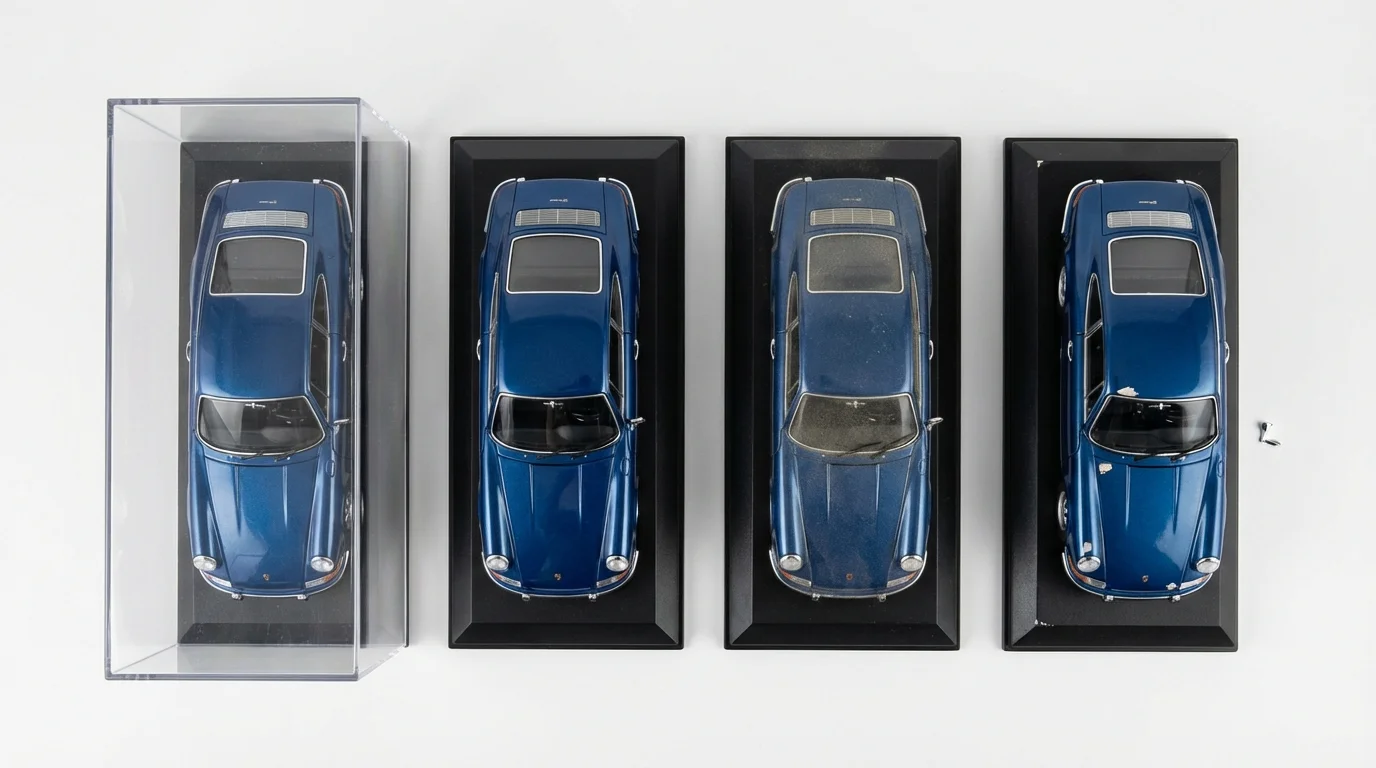
Original packaging increases diecast model value by at least 20%, and in many cases considerably more. We’ve personally seen models with pristine boxes sell for double the price of identical models without packaging. That’s not an exaggeration.
The condition grading system most collectors use runs from Mint (perfect, with all original packaging), through Near Mint (slight imperfections only visible on close inspection), Good (minor wear visible), down to Poor (noticeable damage). Each step down costs you roughly 15-25% of value. A model that drops from Mint to Good has potentially lost 40% or more.
Do you display your models outside their boxes? If so, are you comfortable with that value reduction? It’s a legitimate choice. Many collectors prefer to actually see and enjoy their models rather than treating them as sealed investments. But go in with your eyes open.
The Completeness Factor: Accessories and Documentation
Missing a wing mirror? That’ll hurt, but probably not catastrophically. Missing the certificate of authenticity on a numbered limited edition? That’s a different story entirely. Documentation proves provenance. In the premium segment, we’ve noticed that complete models (box, inner packaging, papers, accessories) command a consistent premium of 25-35% over identical models with missing elements.
Five boxed Minichamps 1:18 models, including a Porsche 956L and a Lotus Renault 97T, sold at auction for about £137 against an estimate of £52. Being boxed was almost certainly a factor in that 2.6x overperformance.
Surprises and Outliers
Not everything behaves as the models predict. Some results genuinely puzzled us.
Hot Wheels at the extreme end. The 1969 Beach Bomb prototype, one of only five known examples, sold for approximately £56,880 (USD 72,000) back in 2011. Current estimates put it above £79,000 (USD 100,000). Models that originally retailed for under a dollar in 1968 now regularly fetch £7,900-31,500 at auction. That’s a 10,000x appreciation over 50-plus years. Obviously, you can’t replicate this. There aren’t any more Beach Bomb prototypes hiding in attics. But it illustrates something important: the ceiling for diecast cars value is astonishingly high when rarity, condition, and cultural significance align.
Collection lots outperforming individual sales. A collection of 1:18 and 1:24 scale models sold for about £323 versus an estimate of only £106, roughly 3x the predicted price. Were these individually remarkable models? No. But as a curated collection, they told a story. Buyers paid a premium for the curation itself. That’s something we hadn’t expected to see so consistently.
The luxury collectibles comparison. Across the broader alternative investments market, the Knight Frank Luxury Investment Index showed a 72.6% increase over the past decade. Classic cars specifically appreciated 25% in 2022 alone. Scale models won’t match those headline numbers, but they also don’t require a garage, insurance, or MOTs. The entry price is considerably lower, too. You’re not putting £50,000 at risk to test the market.
Implications and Recommendations
Right, so what should you actually do with all of this? Whether you’re just getting started or you’ve been collecting for decades, here are our honest recommendations.
For New Collectors
If you’re new to this, check out our beginner’s guide to starting a collection for the basics. From an investment perspective specifically, here’s what the data suggests.
Start with what you love, not what you think will appreciate. Seriously. The collectors who do best financially are the ones who understand their niche deeply enough to spot undervalued models. You won’t develop that instinct by chasing trends. Buy models of cars you genuinely care about. The knowledge follows naturally.
Keep everything. Box. Inner packaging. Certificate. Little plastic bag of spare wing mirrors. Everything. Even if you plan to display the model. Store the packaging flat somewhere dry. Your future self will thank you.
Budget roughly £130-260 per model if value retention matters to you. Below that, you’re in mass-market territory where appreciation is uncommon. Above it, the risk-reward changes, and you need more expertise to make good calls. The £130-260 sweet spot captures limited editions from brands like Solido, GT Spirit, OttOmobile, and entry-level AUTOart.
For Experienced Collectors
Consider resin if you haven’t already. The data consistently shows stronger appreciation in the premium resin segment. Production runs of 150-500 pieces from established brands (BBR, Tecnomodel, Looksmart) are where the secondary market activity is hottest. Yes, they’re sealed, so you can’t open the doors. But have you considered that’s part of the appeal?
Watch for discontinued models from active brands. When a manufacturer stops producing a specific model, secondary demand often spikes within 12-18 months. We’ve seen this pattern repeatedly with CMC, AUTOart, and Minichamps. Registered collectors in the hobby increased 15% annually to over 50,000 members. That’s more demand chasing the same limited supply of discontinued models.
Diversify across at least two scales. 1:18 has the deepest secondary market, but 1:43 offers lower entry prices and strong collector communities, particularly for motorsport subjects. Don’t put everything into one basket, even if that basket is a beautiful CMC Mercedes.
Frequently Asked Questions
Are scale model cars a good financial investment?
They can be, but probably shouldn’t be your primary investment strategy. The diecast scale model market is growing at 7.70% CAGR and the broader market is projected to nearly double by 2032. Premium limited editions from established brands show the strongest returns. However, liquidity is low compared to stocks or bonds, and you’ll need patience. Diecast models are better suited for long-term holding (years to decades) rather than quick profits. Think of it as a hobby that can pay for itself rather than a wealth-building tool.
How do I find current market values for my models?
Start with completed auction listings on eBay (filter for “sold” items, not just listed prices). For more structured data, Barnebys aggregates auction results across multiple platforms. They had 1,507 documented sold lots for 1:18 diecast alone when we checked. For current retail pricing, manufacturer websites and specialist retailers (like us, naturally) give you the baseline. The gap between retail and secondary market price is your appreciation rate.
Which scales tend to hold value best?
1:18 and 1:43 dominate the secondary market in both volume and price consistency. 1:18 has the broadest collector base and most auction activity. 1:43 is particularly strong in Europe for motorsport subjects. 1:64 (Hot Wheels scale) can produce extreme outliers, as the Beach Bomb prototype proves, but the vast majority don’t appreciate meaningfully. 1:12 is ultra-premium with very limited data, though the models that do trade hands tend to hold value well.
How should I cite data from this analysis?
We’ve drawn from publicly available sources including GlobeNewsWire’s market report, Business Research Insights, Barnebys auction data, and official manufacturer pricing. Feel free to reference this article with a link back to Models118. For the underlying market reports, we’ve linked the primary sources throughout.
Data Appendix
For those who want to dig deeper, here’s a summary of our sample composition.
| Data Source | Sample Size | Period | Focus |
|---|---|---|---|
| Barnebys auction results | 1,507 sold lots | 2024-2026 | 1:18 scale diecast |
| CMC official catalogue | ~165 models | Current | 1:18 premium diecast retail pricing |
| Business Research Insights | Market-wide | 2025-2032 projection | Industry sizing ($4.37bn to $6.23bn) |
| GlobeNewsWire | Market-wide | 2025-2032 projection | Segment sizing ($1.40bn to $2.36bn) |
| Wheeljack’s Lab | Top 10 lots | 2018-2023 | Hot Wheels record auction prices |
| Market Metric | Value | Source |
|---|---|---|
| Global diecast market (2025) | $1.40 billion | GlobeNewsWire |
| Projected market (2032) | $2.36 billion | GlobeNewsWire |
| CAGR | 7.70% | GlobeNewsWire |
| Collector market share | 62% | Business Research Insights |
| Limited edition launches (2023) | 1,200+ | Accio market data |
| Secondary market premium (limited eds) | Up to 300% | Accio market data |
| Packaging value premium | 20%+ | DiecastParkingApp |
| Manufacturing cost increase | 8% | Business Research Insights |
| Annual collector growth | 15% | Business Research Insights |
This article reflects data available as of early 2026. Market conditions change. Nothing here constitutes financial advice. Collect what you love first; if it appreciates, that’s a bonus.