


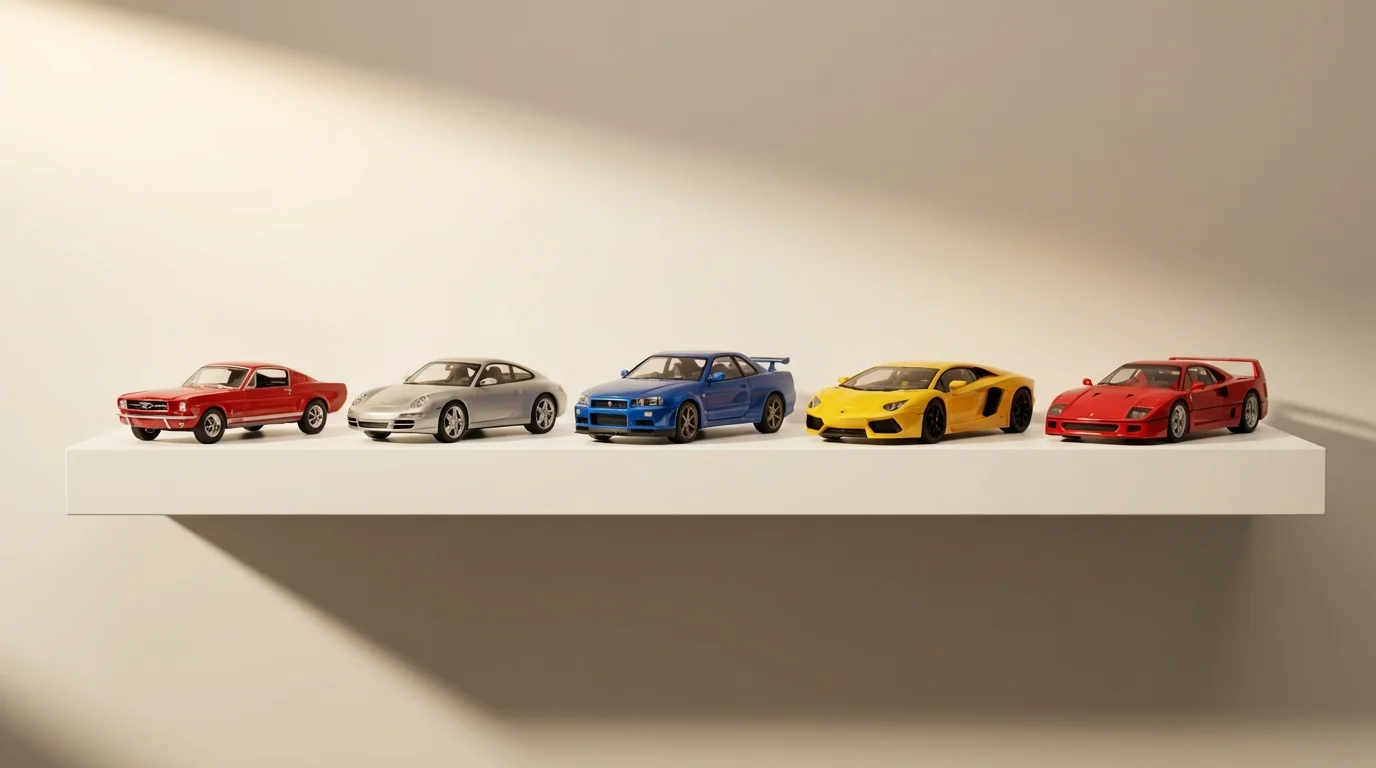
TL;DR: Starting a model car collection comes down to five decisions: pick your scale, choose between diecast and resin, find a brand tier that fits your wallet, set a realistic budget, and build around a theme. Get those five right and you’ll avoid the scattered, directionless buying that frustrates most beginners. This guide walks through each decision with real price ranges and concrete starter recommendations.
Decision Criteria Overview Table
Before we get into the detail, here’s a snapshot of what you’re actually deciding. Every new collector faces these five choices, and the order matters more than most guides let on.
| Decision | Why It Comes First | Typical Range | Beginner Recommendation |
|---|---|---|---|
| Scale | Determines display space, detail, and price ceiling | 1:64 to 1:12 | 1:43 for space-conscious, 1:18 for display-focused |
| Material | Shapes the collecting experience (hands-on vs display) | Diecast or resin | Diecast first, add resin later |
| Brand tier | Sets quality expectations and price floor | Entry to premium | Mid-range (Norev, Solido, IXO Models) |
| Budget | Prevents impulse buying and regret | £20 to £400+ per model | Allocate 70% models, 20% display, 10% accessories |
| Theme | Gives your collection a story and stops random accumulation | Marque, era, motorsport, or scale | Start with one theme, expand after 10 models |
How to Choose the Right Scale
Scale is the single most important decision you’ll make, because it locks in everything else: how much shelf space you need, how much detail you can expect, and how much each model costs. Get this wrong and you’ll end up with a mismatched collection that never quite looks right together.
The Most Popular Collector Scales
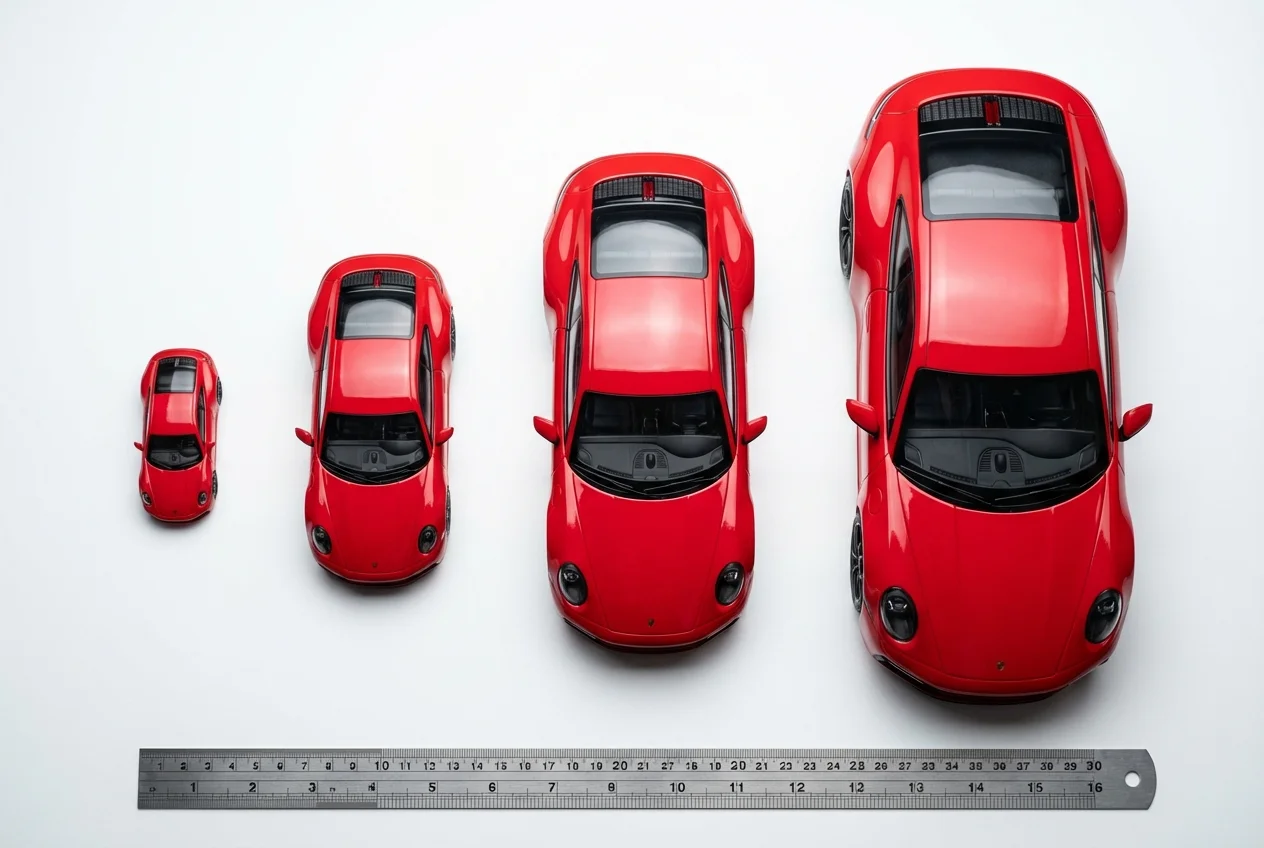
Not all scales are created equal. A 1:18 model sits at roughly 10 to 12 inches long (AUTOBarn Models), making it the go-to for collectors who want to see every panel gap and badge. A 1:43 model, by contrast, comes in at about 4 inches (Model Cars Houston), which means you can fit a dozen on a shelf that would hold four 1:18s.
Then there’s 1:64, the pocket-sized scale where Hot Wheels lives. Don’t dismiss it. Some collectors build genuinely impressive 1:64 collections with premium pieces from Inno64 or Mini GT. And at the other end, 1:12 is museum territory, with models reaching 35 to 40 centimetres.
Which one should you pick? Honestly, it depends on your space and how you want to interact with your models. We’ve seen plenty of collectors start at 1:18, realise they’ve run out of shelf space after eight models, and wish they’d gone 1:43 from the start.
Scale and Display Space Requirements
Here’s something nobody tells you upfront: display space isn’t just about the model itself. You need clearance around it, room for the door to swing if it’s diecast with opening features, and enough depth for a proper case.
| Scale | Typical Length | Shelf Depth Needed | Models per 80cm Shelf | Price Range |
|---|---|---|---|---|
| 1:64 | ~7 cm | 10 cm | 10-12 | £1-£25 (Model Cars Houston) |
| 1:43 | ~10 cm | 15 cm | 6-8 | £25-£85 (Model Cars Houston) |
| 1:18 | ~25-30 cm | 20 cm | 2-4 | £130-£260 (Model Cars Houston) |
| 1:12 | ~35-40 cm | 25 cm | 1-2 | £260-£600 (Model Cars Houston) |
Scale Mixing: When It Works and When It Doesn’t
Can you mix scales in one collection? Of course. Should you do it on the same shelf? Probably not.
A 1:43 Porsche 911 next to a 1:18 Porsche 911 doesn’t look like a curated display. It looks like a sizing error. But having a 1:18 display cabinet in the lounge and a 1:43 motorsport collection on your desk? That works brilliantly. The key is to separate them visually so each grouping feels intentional.
We’ve found that collectors who mix scales within a single display tend to regret it once the collection grows past six or seven models. Keep the scales together, keep the shelves tidy.
How to Choose the Right Material
After scale, material is the decision that shapes how you’ll actually interact with your collection. Diecast and resin are fundamentally different experiences, not just different price points. For a deeper breakdown, see our diecast vs resin material guide.
Diecast for Hands-On Collectors
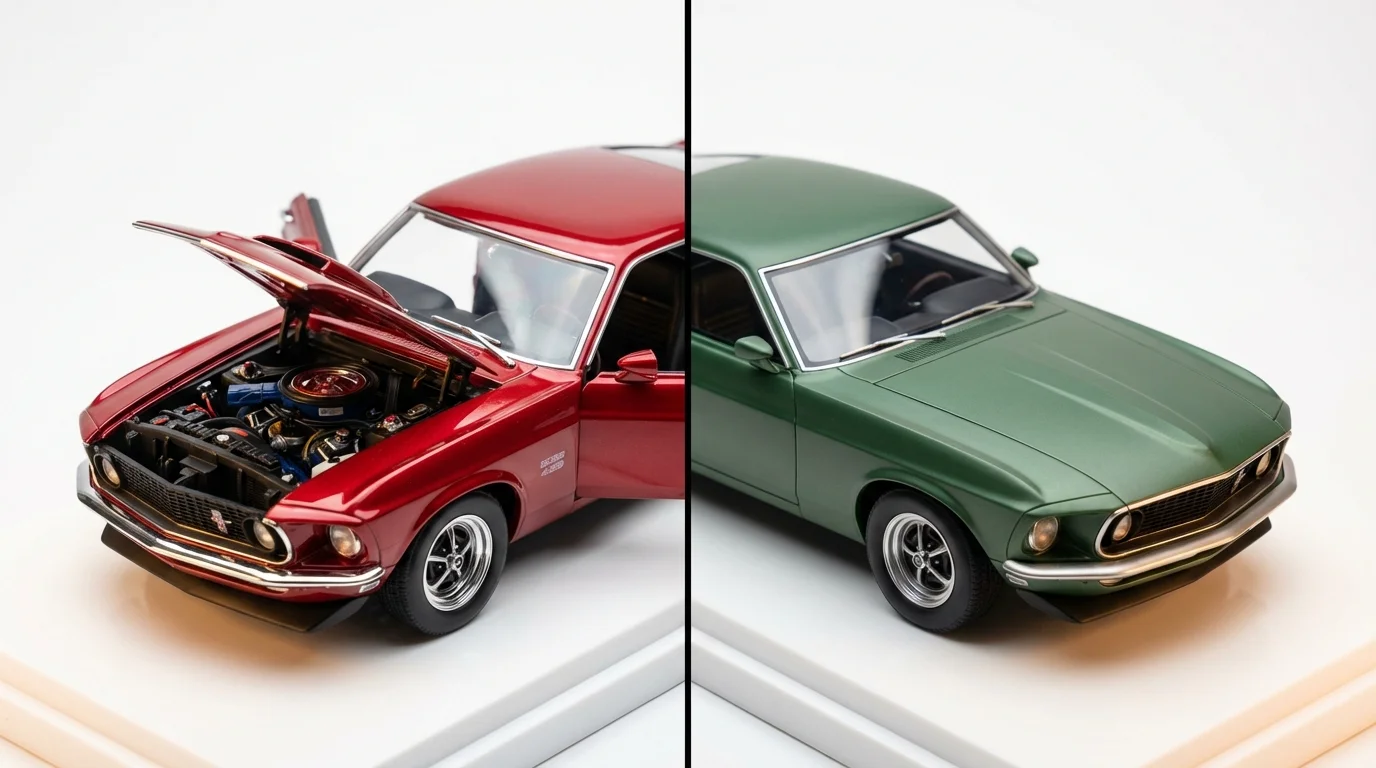
Diecast models are made from zinc alloy (zamak), and that metal body gives them a satisfying weight in the hand. Most diecast models in 1:18 come with opening doors, hoods, and boots, so you can actually explore the interior and engine bay detail. It’s a tactile hobby at this level.
Entry-level diecast brands like Maisto and Bburago offer solid 1:18 models for under £25 (Model Toy Cars). Mid-range producers such as Norev, Solido, and IXO Models push the detail further with better paint, finer interior work, and more accurate proportions. Is the jump from a £20 Maisto to a £60 Solido worth it? In our experience, absolutely. You’ll notice the difference the moment you open the box.
Resin for Display-Focused Collectors
Resin models are sealed display pieces made from polyurethane resin. No opening parts, no moving bits, nothing to fiddle with. And that’s precisely the point. Because resin doesn’t need hinges and latches, the body lines stay razor-sharp. Proportions are tighter. The overall silhouette is cleaner.
Brands like GT Spirit, OttOmobile, and BBR produce resin models in limited runs, often between 500 and 3,000 pieces. They come fully painted with a glossy finish that rivals diecast at the same price point, sometimes surpasses it. Don’t make the mistake of thinking resin means unfinished or plain. It doesn’t.
Starting with Diecast and Adding Resin Later
Here’s what we’d suggest if you’re genuinely torn: start with diecast. It’s more forgiving for beginners. You can handle the models, open the doors, get a feel for what good detail looks like. Once you know what you value in a model, adding a resin piece or two gives you a point of comparison. Most collectors we know followed exactly this path.
How to Choose Your First Brand
With dozens of manufacturers producing model cars, picking your first brand can feel paralysing. But it doesn’t have to be. Our brand tier ranking covers the full landscape. Here, we’ll focus on what matters for your very first purchase.
Matching Brand Tier to Your Goals
Brands cluster into rough tiers. Entry-level names like Maisto, Bburago, and Welly offer affordable models with decent detail (Weye Model Cars). Mid-range producers, including Norev, Solido, and IXO Models, deliver noticeably better detail and often include opening features. Premium brands like AUTOart, CMC, and BBR sit at the top, with museum-quality reproductions and price tags to match.
Where should you start? If your budget allows £40-£70 for your first model, mid-range is the sweet spot. You’ll get a model that genuinely impresses without the anxiety of handling something that costs as much as a weekend away. Would a £200 AUTOart blow your mind? Probably. But it’s not the best way to learn what you like before committing at that level.
Evaluating Quality When You’re New
When you haven’t held many models, how do you tell good from mediocre? Four things to look at:
- Panel gaps: consistent, fine lines between body panels signal precision tooling
- Paint: even coverage, no orange peel, clean colour transitions
- Proportions: compare the model to a photo of the real car, especially the greenhouse (window area) and wheel arch spacing
- Badges and trim: photo-etched metal parts look significantly better than printed or tampo-applied ones
Don’t worry if you can’t judge all four immediately. After your second or third model, you’ll start noticing differences you’d never have spotted before. The eye trains quickly.
Setting Your Budget
A model car collection can cost anywhere from a few hundred pounds to tens of thousands, depending on scale, brand tier, and how fast you buy. The global diecast model car market sits at USD 4.37 billion (Business Research Insights), with Europe holding 30-36% of that share. This isn’t a niche hobby. It’s a proper market, and knowing your budget before you start is what separates intentional collectors from impulse buyers.
Budget Allocation: Models vs Display vs Accessories
A common mistake? Spending everything on models and having nothing left for a proper display. We’d suggest a rough split of 70% on models, 20% on display (cases, shelving, lighting), and 10% on accessories (cleaning supplies, microfibre cloths, catalogue books).
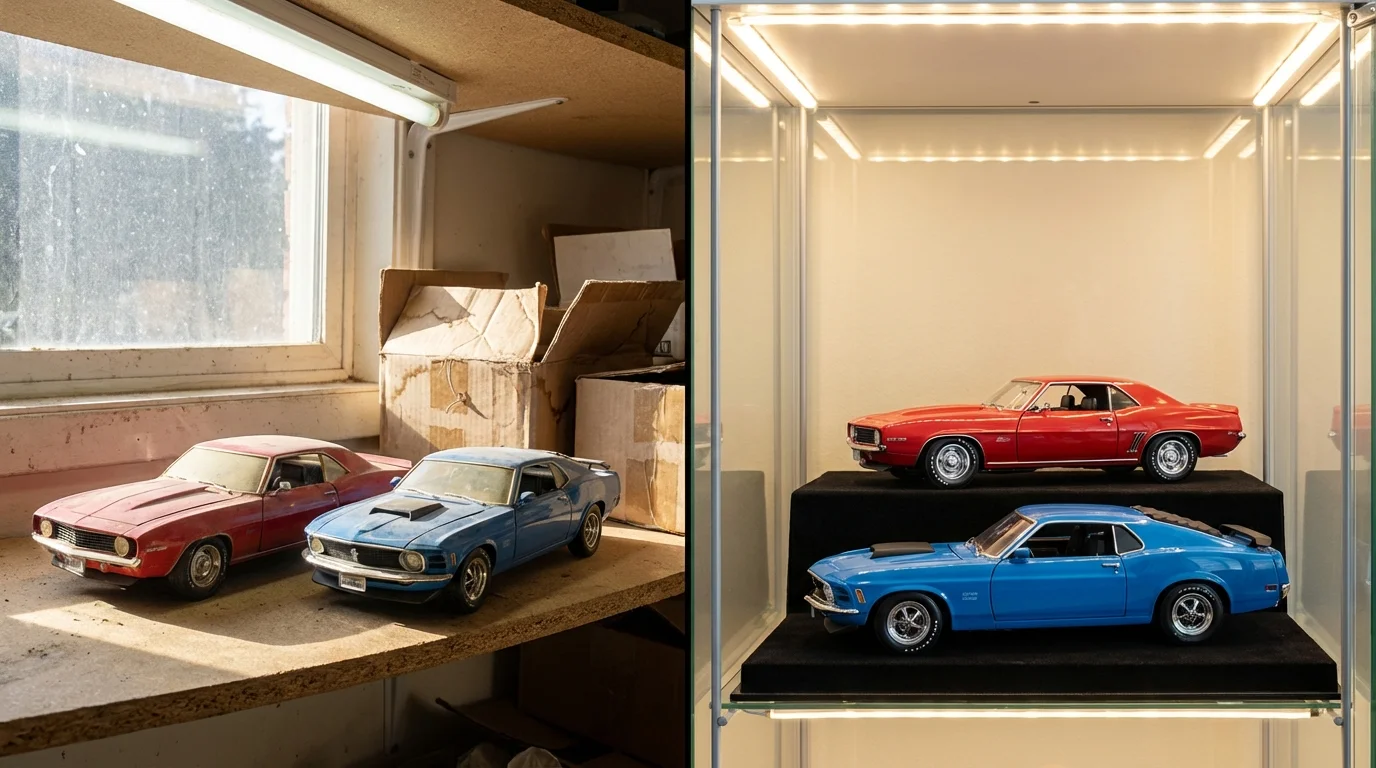
Why does display matter so much? Because a £60 Solido in a glass cabinet with LED strips looks better than a £200 AUTOart sitting on a dusty bookshelf. Presentation is half the hobby.
The True Cost Beyond the Model
What catches newcomers off guard is the costs that aren’t printed on the price tag. Shipping for a 1:18 model can run £8-£15 within Europe. A decent IKEA Detolf display case costs around £60. LED lighting strips add another £15-£20. And if you’re buying from abroad, customs duties might apply depending on value.
Factor these in from the start. A £500 annual budget sounds generous until you’ve spent £100 of it on cases, lights, and delivery charges. Planning ahead means your actual model budget stays intact.
Building a Theme for Your Collection
A model car collection without a theme is just a shelf of random cars. That might sound harsh, but it’s true. Themes give your collection narrative, visual cohesion, and (perhaps most importantly) they make it easier to say no to impulse purchases that don’t fit.
Single Marque vs Multi-Marque Collections
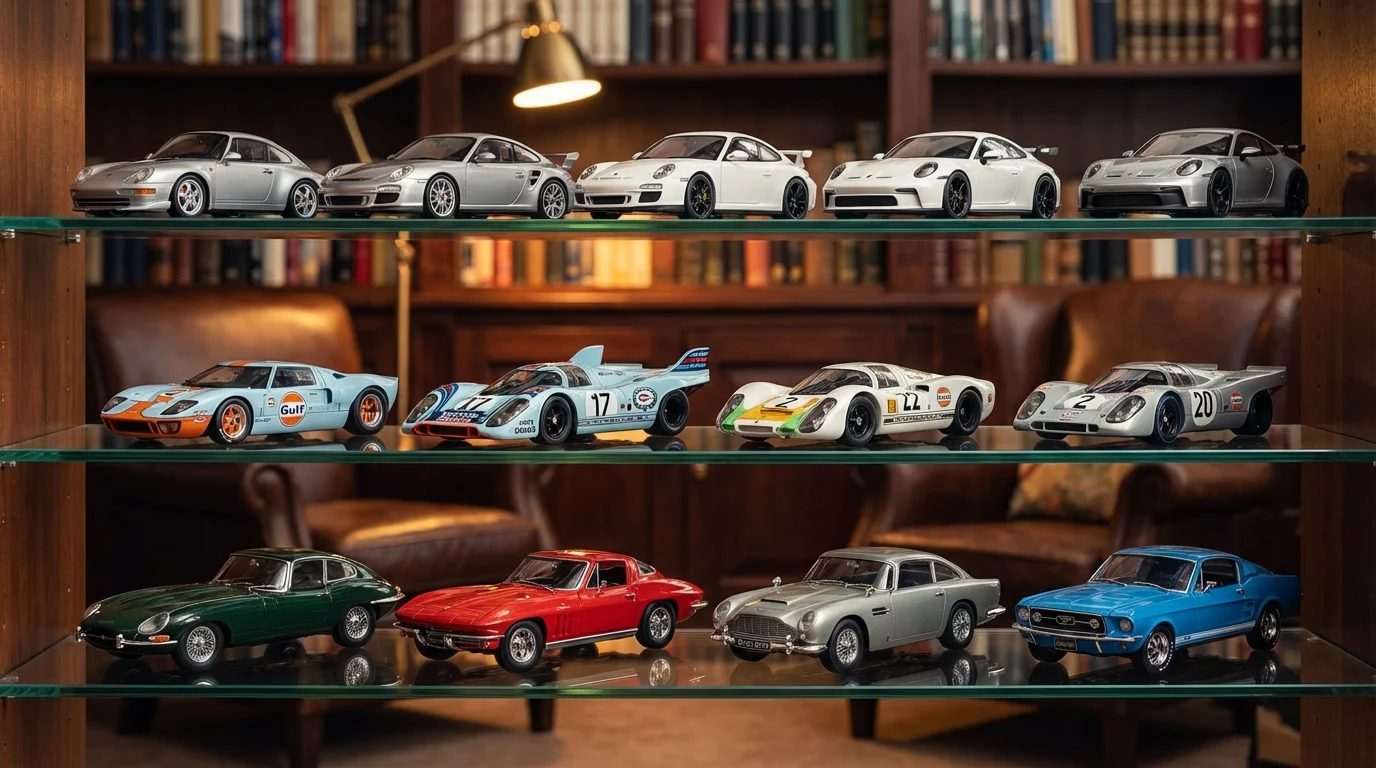
The simplest theme is a single car brand. Collecting every notable Porsche in 1:18 diecast, for instance, gives you an obvious framework. You know what to look for, you know what gaps remain, and each new addition strengthens the whole.
Multi-marque themes work too, but they need a tighter focus. “European sports cars” is too broad. “European GT racers from the 1990s” is specific enough to guide purchases while still offering plenty of variety. What’s yours going to be?
Era-Based and Motorsport Themes
Motorsport collections have a built-in advantage: clear boundaries. Collecting 1:43 Le Mans winners, for example, gives you a defined list. You know exactly which models you need, and the hunt for each one becomes part of the fun.
Era-based themes (1960s classics, 1980s Group B rally, modern hypercars) also work well because they create visual harmony on the shelf. Cars from the same period tend to share design language, and that shared aesthetic makes a display cabinet look genuinely curated rather than thrown together.
How to Evolve Your Theme Over Time
Your theme isn’t a life sentence. Most collectors refine their focus after the first year. Maybe you started with “all BMWs” and realised you’re most drawn to the M-car lineage. That’s natural, and it’s actually a good sign. It means you’re developing taste, not just accumulating.
The one thing we’d recommend? Don’t change themes every month. Give your current focus at least six models before reassessing. Otherwise you’ll end up with a scattered collection that tells no story at all.
Common Mistakes New Collectors Make
Every experienced collector has a list of things they wish they’d known at the start. We’re no different. Here are the pitfalls we see most often, and how to sidestep them. For more on protecting your investment, see our care and display guide.
Buying Without a Focus
This is by far the most common regret. A Ferrari here, a random truck there, a Hot Wheels pack because it was on sale. Six months in, you’ve spent £300 and your shelf looks like a car boot sale. Choose a theme first, buy second.
Ignoring Storage and Display Conditions
Display cases protect models from dust and UV damage (Diecast Parking App). It sounds obvious, but we’ve seen collections worth thousands sitting on open shelves in rooms with direct afternoon sun. UV fades paint. Dust scratches clear coat. Temperature swings warp packaging. Even a basic glass-fronted cabinet makes a massive difference.
Overpaying on the Secondary Market
Limited edition models appreciate in value sometimes, but not always. The hype around a new release can push secondary market prices well above retail, only for them to settle back down within months. Don’t panic-buy a sold-out model at twice the price. Patience, more often than not, pays off in this hobby.
Recommended Starting Points by Collector Type
Not every collector wants the same thing. Here are four profiles with tailored suggestions. Which one sounds most like you?
The Budget Explorer
You want to get started without a major financial commitment. Look at 1:43 diecast from IXO Models or Solido, or 1:18 models from Bburago, which are known for high-quality paint finish and moving parts (Model Toy Cars). A first purchase of £20-£40 lets you experience the hobby without anxiety.
The Detail Enthusiast
You care about every seam line, every badge, every interior stitch. Start with a single mid-range 1:18 diecast from Norev or a composite model from AUTOart. Expect to spend £60-£150 on your first piece. Hold it. Open the doors. Look at the engine bay. This is where the hook sinks in.
The Motorsport Fan
You follow racing and want models that capture specific liveries and seasons. 1:43 is your scale. Spark and IXO Models cover Le Mans, Formula 1, WRC, and GT racing with an enormous back catalogue. A focused motorsport collection in 1:43 grows fast without eating your entire shelf.
The Investment-Minded Collector
You’re interested in models that might hold or increase their value. Focus on limited-edition resin from brands like GT Spirit, OttOmobile, or BBR. Keep models in original packaging, store them properly, and choose subjects with strong enthusiast followings (Porsche, Ferrari, BMW M-cars). But remember, collecting primarily for profit takes the joy out of it quite quickly. Collect what you love first.
FAQ
How much should I spend on my first model?
Between £25 and £70 is a sensible range for a first model car. At that level, you can get a genuinely well-made 1:18 diecast from Solido or Norev, or a detailed 1:43 from IXO Models or Spark. There’s no need to spend more until you’ve worked out what you value most in a model.
Is model car collecting a good investment?
It can be, but it shouldn’t be your primary motivation. Some limited-edition models appreciate significantly, especially those with production runs under 1,000 pieces. Others don’t. The market is growing at a projected CAGR of 5.2% (Business Research Insights), which suggests long-term health, but individual model values vary. For a deeper look, see our guide on investment and resale value.
Where should I buy model cars?
Specialist online retailers (including European shops that carry official distributor stock), manufacturer direct outlets, and established eBay sellers with strong feedback ratings. Avoid marketplace listings without clear photos or sellers who can’t confirm the manufacturer. Join collector forums too, because experienced members often sell pieces from their own collections at fair prices.
How many models make a collection?
Technically, two. Realistically, most people start feeling like proper collectors once they have five or six models that share a theme. It’s the intentionality, not the quantity, that makes it a collection rather than a random assortment.
Should I keep model cars in their boxes?
If you’re collecting for potential resale value, yes. Original packaging matters significantly on the secondary market. If you’re collecting for display enjoyment, take them out and put them in a proper case. A sealed box on a shelf defeats the purpose for most people. Some collectors compromise by keeping the box stored separately and the model displayed.
Conclusion
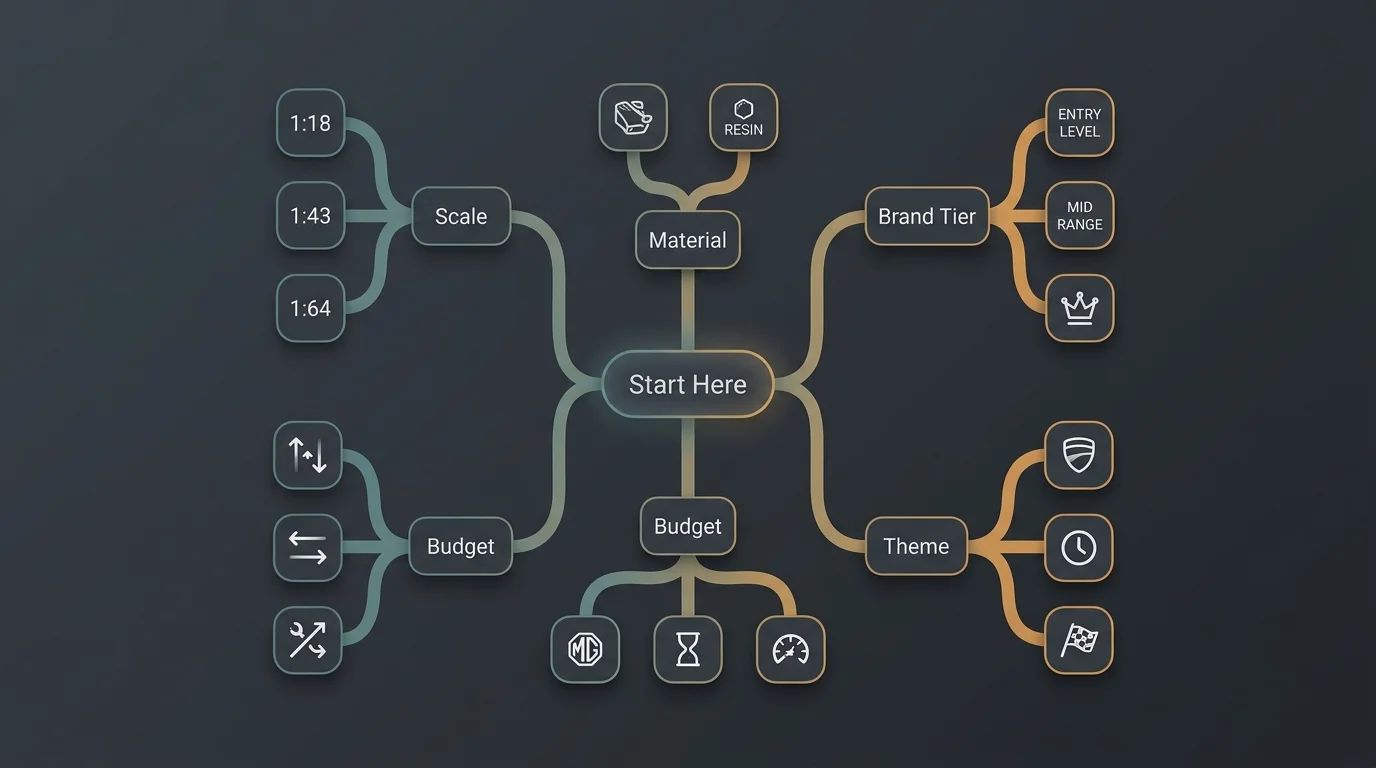
Starting a model car collection doesn’t require encyclopaedic knowledge or a massive budget. It requires five clear decisions: scale, material, brand tier, budget, and theme. Make those intentionally and your collection will grow with purpose rather than by accident.
Pick one scale. Choose one material to start with. Find a brand that matches your budget. Set a spending limit you won’t regret. And build around a theme that genuinely excites you.
The models will take care of the rest. That first time you open a box and place a well-chosen model on a properly lit shelf, you’ll understand why this hobby has held collectors’ attention for decades. We’ve been there. You will be too.