


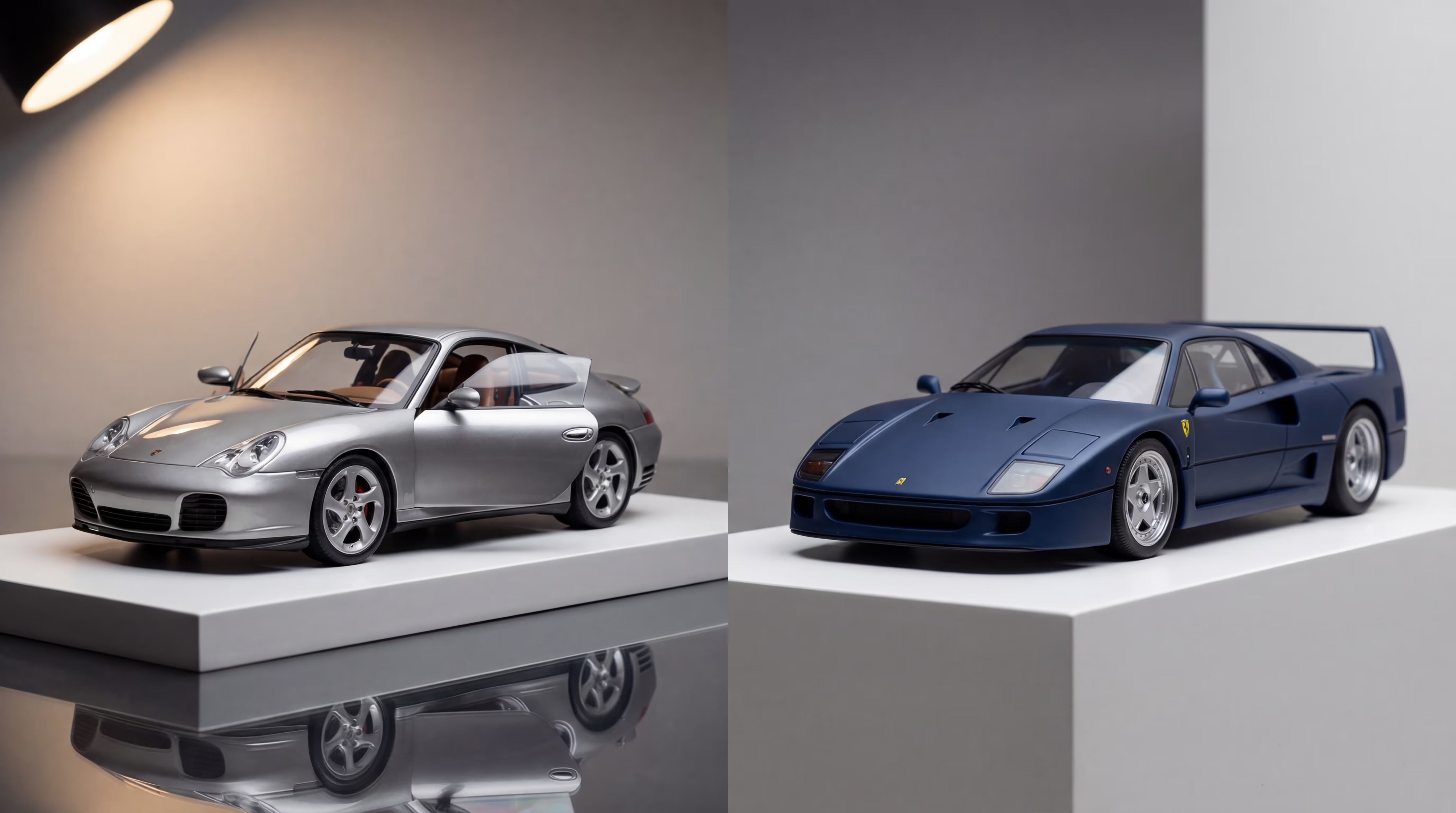
TL;DR: Diecast uses zinc alloy (zamak) and typically features opening doors, bonnets, and boots. Resin uses hand-poured polyurethane and is always sealed, but achieves sharper body lines and finer surface detail. Composite models combine both. Price, handling preference, display style, and which subjects you collect should all drive your choice.
What Are Diecast and Resin Model Cars?
At their core, diecast and resin model cars are defined by one thing: the material used to build the body. That single choice cascades into differences in weight, detail, durability, production volume, and price. If you’ve ever wondered why one 1:18 model opens its doors and another doesn’t, or why some look impossibly crisp from certain angles, the answer’s almost always material.
The global die-cast toys market was valued at USD 3.9 billion in 2024, projected to grow to USD 6.09 billion by 2034 at a 4.3% CAGR (Global Market Insights). Within that figure, the collectibles category jumped 33% in a single year, driven heavily by adult collectors (Circana). Adults aged 18 and over grew 19% as a purchasing demographic in one year, and people aged 12 and over now account for 25% of toy purchases in the US (roughly USD 9 billion annually per Data Bridge Market Research). This is a market actively choosing between these two material philosophies every day.
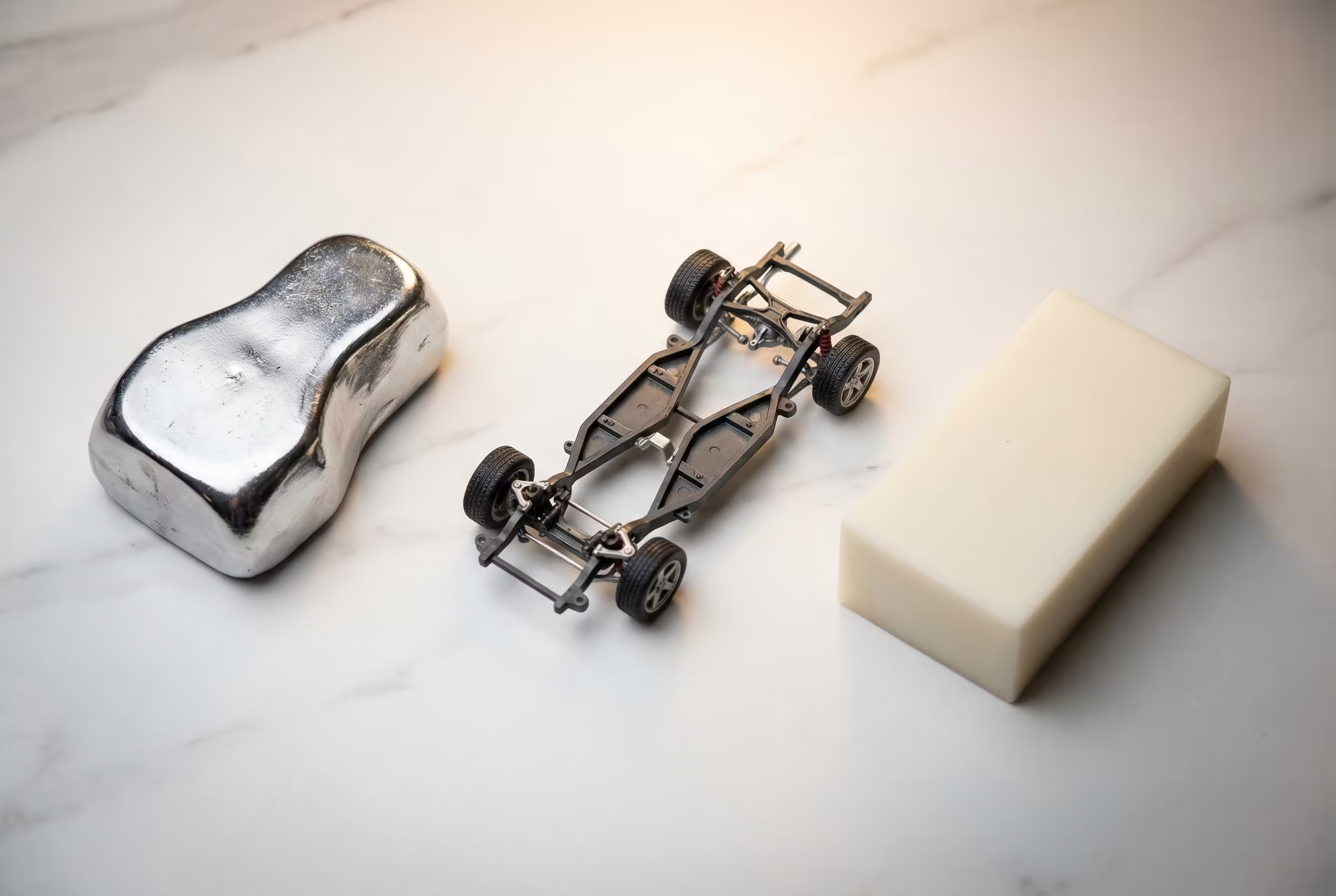
We stock both materials across hundreds of models, and the question we hear most often from collectors is simply: which should I choose? In our experience, it comes down to three things: how you display, how much you handle, and which cars you collect. We’ve seen collectors thrive with both materials, and we’ve seen others commit entirely to one. Neither approach is wrong.
Diecast: Zinc-Alloy Metal Construction
Diecast models are built from zamak (a mixture of zinc and aluminium alloy, sometimes with traces of magnesium and copper), injected under high pressure into a steel die mould (HobbyZero). The name says it all: die is the mould, cast is the injection. The first modern diecast model cars appeared in 1919, made by the Dowst Brothers under the Tootsie Toys brand (HobbyZero). Norev, one of Europe’s best-known manufacturers, didn’t switch from Rhodialite plastic to zamak until around 1965 (CitroenVie).
What zamak gives you is a dense, substantial body. The metal genuinely has heft in your hand. It also permits mechanical complexity: torsion resistance in the alloy means hinges at doors, bonnets, and boots can be opened and closed repeatedly without the body cracking (Motorsport Maranello). That functional detail is something resin can’t replicate at standard collector scales.
Resin: Hand-Poured Polyurethane Construction
Resin models use a two-part polyurethane system: Component A (liquid resin) is mixed with Component B (hardener) and poured into silicone moulds (Motorsport Maranello). The curing process is slower and far more labour-intensive than injection casting. This is why resin manufacturers typically run editions of 500 to 3,000 pieces rather than tens of thousands.
One point that bears repeating because it’s so often misunderstood: resin models aren’t raw, grey, or unfinished. They carry full paint, detailed interiors, and badge graphics just like any diecast. The material is simply different, and it’s sealed. Resin’s physical properties don’t permit opening features at standard collector scales, so every model from GT Spirit, OttOmobile, or Almost Real is built as a display piece from the ground up. That’s a deliberate design choice, not a limitation.
How They Are Made: Manufacturing Differences
Manufacturing method is where the two materials diverge most sharply, and it explains almost everything about their respective price points and production volumes. Metal tooling is expensive upfront but fast once running. Resin’s cheaper to tool initially but requires skilled hand-labour at every stage of production.
Diecast Production: Die Injection and Assembly
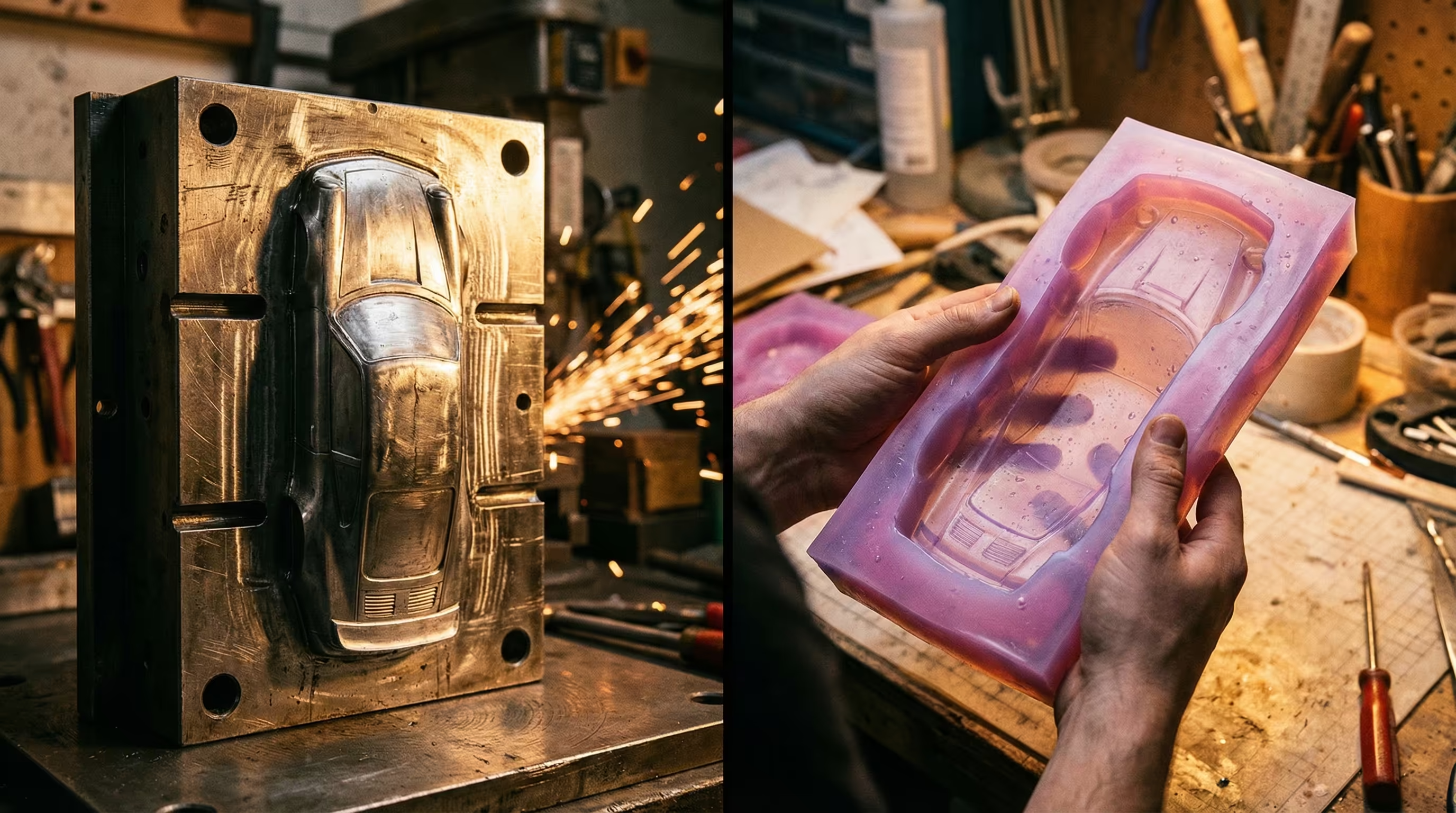
Body panels are shot from the die in fractions of a second. Once cooled, they’re trimmed, joined, painted, and assembled on production lines. The key advantage is repeatability: once a die is cut, every casting from it is dimensionally identical. That’s how Solido and Norev produce high volumes at accessible prices, while Minichamps applies the same fundamental process to achieve finer tolerances at a higher price point.
Assembly still involves skilled work throughout. Window glass, interior tubs, wheels, and dozens of small trim components are fitted by hand. But the body itself is a machine-made component, which gives diecast an inherent edge in production efficiency. Five factors ultimately drive the final retail price: detail level, material quantity, material quality, scale, and the scarcity premium of limited editions (HobbyZero).
Resin Production: Silicone Moulds and Hand Assembly
Resin production begins with a master model, typically CNC-machined from digital data. It’s slower work than diecast from start to finish. Silicone moulds are taken from this master and can only produce a limited number of pours before they lose sharpness and degrade. Each pour is then hand-demoulded, cleaned, and prepped for painting. Unlike diecast, every resin body goes through significant hand-finishing before it reaches the paint stage.
Because the main body is moulded in one piece, resin achieves something diecast struggles with: consistent, tight shut-lines across the whole car. There aren’t assembly gaps where separate panels join, because in most cases there are no separate panels. That’s why collector-grade resin from brands like GT Spirit often looks almost startlingly clean on the shelf.
Why Manufacturing Method Affects Price
A 1:18 diecast model from a reputable mid-tier brand typically sits between roughly £120 and £190 (Model Cars Houston, USD 150–300 converted). A 1:43 diecast ranges from around £80 to £120 (Model Cars Houston, USD 100–150 converted). Boutique resin at the upper end reaches considerably higher. Resin can’t compete at the very low end because the hand-labour cost floor is structurally higher.
| Factor | Diecast | Resin |
|---|---|---|
| Tooling cost | High (precision steel dies) | Lower (silicone moulds, shorter lifespan) |
| Production volume | High (thousands to tens of thousands) | Low (500–3,000 typical) |
| Labour intensity | Moderate (machine-led with hand assembly) | High (hand-poured and hand-finished throughout) |
| Typical 1:18 price (GBP) | £25–£230+ | £65–£300+ |
| Opening features | Yes (typically doors, bonnet, boot) | No (always sealed) |
| Body shut-line accuracy | Good to excellent | Excellent (one-piece construction advantage) |
Detail and Finish: Comparing Quality
Ask most experienced collectors which material produces more accurate body lines, and you’ll hear resin far more often. Ask which provides a more satisfying hands-on experience, and the metal option wins. Both answers are correct, and the distinction matters when you’re deciding what to buy.
Detail at the collector level isn’t a single variable. Diecast excels in functional features and interior investment; resin in body surface accuracy and shut-line precision. Diecast “excels in functional features like opening bonnets,” while resin “excels in capturing the curve of the body to the stitching on seats” (Authentic Collectables). Both observations are fair, and they describe different things.
Paint and Surface Finish
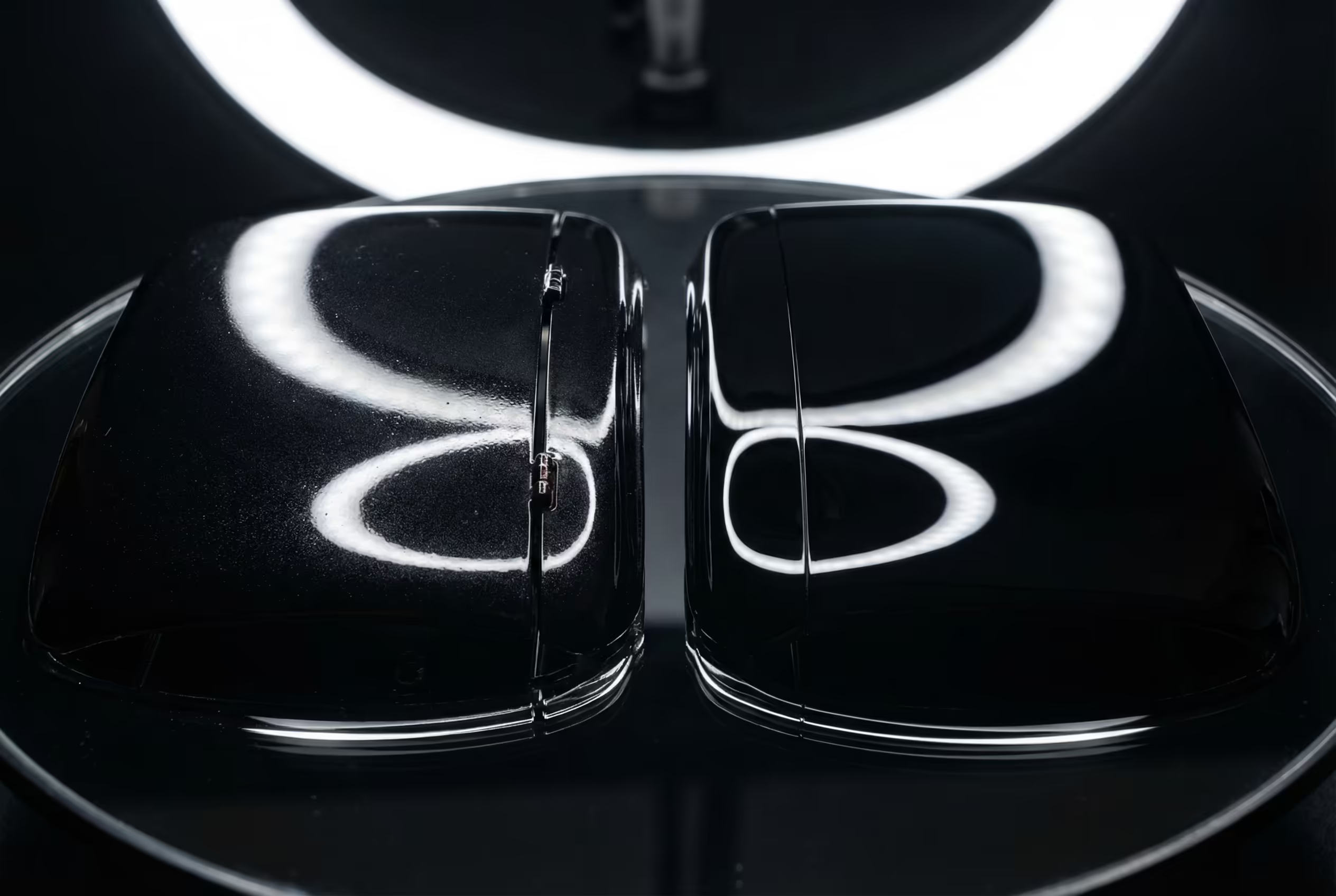
Resin bodies are non-porous and smooth from the mould, giving the base coat a uniform surface to bond to. The result is typically a very glossy, even finish with sharp colour transitions and clean metallic effects. Diecast can sometimes show stippling (small paint dots) from the casting surface texture, or minor surface irregularities in the zinc (Motorsport Maranello). This doesn’t mean diecast finishes look poor, though: high-end Minichamps and Norev pieces are beautifully painted. Resin simply gives the painter a more forgiving starting surface.
Panel Gaps and Shut Lines
Here resin has a structural advantage. Because the body is moulded as a continuous piece, there are no assembly seams to manage at visible panel boundaries. Collectors on DiecastXchange consistently note that resin models offer tight shut-lines with no risk of doors becoming loose over time (DiecastXchange). Diecast models, assembled from separate cast and pressed components, can develop slight gaps over years of display, particularly around door apertures. At display distance this is often invisible; under close inspection it’s real.
Interior and Undercarriage Detail
Diecast wins here in practice, for a clear reason: manufacturers invest in complete interiors because collectors will open the model and examine them. High-end Minichamps, Kyosho, and CMC models have dashboards, steering columns, detailed pedal boxes, and door card trim. Resin models have interiors visible through the windows, but since the model never opens, the investment in interior detail tends to be secondary. This is a consequence of the material rather than a criticism of the brands. It’s worth understanding.
Is an interactive model always the better model? From our experience, it depends entirely on how you actually interact with what’s on your shelf. We’ve had customers pick up their first quality diecast and immediately comment on the weight and the opening parts. We’ve also had collectors who display resin exclusively and never feel they’re missing anything.
Weight and Durability: The Physical Experience

The Heft Factor: What the Weight Tells You
Lift a quality 1:18 diecast model and you feel something substantial in your hands. According to DiecastXchange collector measurements, a typical 1:18 diecast model weighs between 700 and 800 grams, with flagship models heavier still. (DiecastXchange Weight Tests) That mass comes from the zamak alloy body, the metal chassis, and all the diecast components throughout. Many collectors describe this heft as one of the qualities that makes the model feel genuinely premium. It doesn’t feel toy-like.
Does weight really matter that much? From what we’ve seen, it matters to more collectors than you’d expect. Resin models are considerably lighter: the polyurethane body is a hollow shell, and with no moving metal parts, the overall weight drops noticeably. AUTOart’s composite models sit somewhere between the two: DiecastXchange found a composite AE86 at 524 grams versus a diecast Wangan Midnight 911 at 598 grams, and a composite Bugatti Veyron at 870 grams with added ballast weights. (DiecastXchange Weight Tests) AUTOart openly states it adds ballast to some composite models specifically to restore that sense of heft. Neither approach is wrong, but collectors who value physical weight as part of the ownership experience will generally prefer traditional diecast.
Durability: Dropping, Displaying, and Long-Term Resilience
Diecast and resin fail in different ways when dropped. A diecast model might survive a minor fall with a bent bumper or a snapped mirror, but the main body typically holds up. Resin is more brittle: a fall from shelf height can crack a panel, shatter a wing, or snap a thin spoiler clean off. The acetate glazing used in resin models is also notably fragile; DiecastXchange notes it’s thinner than the glass-effect material in most diecast builds and correspondingly more vulnerable to damage. (DiecastXchange Resin Construction Analysis)
For long-term display, diecast models carry one hidden threat: zinc pest, the progressive deterioration caused by impurities in zamak alloy. DiecastXchange notes that humidity above 65% accelerates the process noticeably, while keeping models in a cool, dry display cabinet largely prevents it. (DiecastXchange Zinc Pest Research) Resin models aren’t immune to damage either; UV light yellows clear plastic glazing and unpainted resin over time. Both materials reward careful display conditions, though the failure modes are quite different.
Opening Features vs Sealed Construction

Why Diecast Models Open
The ability to open doors, bonnet, and boot is built into the design process of diecast models from the start. Engineers at Solido, Norev, Minichamps, and comparable brands design moving parts as core features, not afterthoughts. The result is models where doors swing open on proper hinges, revealing full interiors, and where bonnets prop up on supports to show detailed engine bays. Authentic Collectables confirms that diecast excels in this area, delivering opening features that resin simply can’t replicate. (Authentic Collectables Material Guide) For collectors who display models with components open, or who simply enjoy operating those mechanisms, diecast remains the only practical choice.
What Sealed Construction Achieves
Resin’s sealed body is a deliberate engineering decision rather than a limitation to hide. Because the mould produces an unbroken shell, the bodywork can have sharper panel lines, tighter shut lines, and more accurate curvature than a diecast body interrupted by cut-outs for opening doors and hinges. Authentic Collectables notes that resin excels at reproducing body curves and upholstery stitching detail. (Authentic Collectables Material Guide) GT Spirit, OttOmobile, and Almost Real models regularly show bodywork accuracy that equals or exceeds equivalent diecast releases, precisely because the sculptor wasn’t working around opening feature requirements.
From a display standpoint, a sealed model has clear advantages: there’s nothing to snap shut incorrectly, no hinge pin to work loose, and the exterior presents identically every time. We’ve noticed this pattern particularly with collectors who photograph their models: sealed resin gives a consistent exterior that looks right from every angle in the frame, with no open door to cast a shadow or interrupt the bodywork line.
Composite Models: A Third Path
Around 2017, AUTOart made a significant shift. Their flagship 1:18 models moved from traditional all-diecast construction to what the brand calls Composite Model technology: ABS plastic body panels over a diecast metal interior chassis and structure. DiecastSociety confirmed this, describing AUTOart’s composite as an ABS body combined with a diecast interior, noting the change carries patent-pending status. (DiecastSociety Composite Technology Review)
The engineering logic is straightforward. ABS plastic can be moulded with finer tolerances than zamak alloy, eliminating two persistent diecast problems: zinc pest (a material defect that causes zamak to deteriorate) and air bubbles that can produce surface imperfections. The plastic body allows sharper panel gaps and tighter shut lines, while the metal interior structure preserves the opening features and structural weight that AUTOart collectors expect. (DiecastSociety AUTOart Composite Analysis)
Be precise about how to classify AUTOart models. They’re not diecast, and they’re not resin. They’re composite. If you’re considering a recent AUTOart release, you should look specifically for the Composite Model label on the packaging. Their composite models do retain opening doors, bonnet, and boot, making them functionally similar to traditional diecast in display terms, but the body material is ABS rather than metal. The original composite releases were priced at around ÂŁ79 to ÂŁ87, placing them alongside top-tier diecast.
Which Brands Lead in Each Material Category
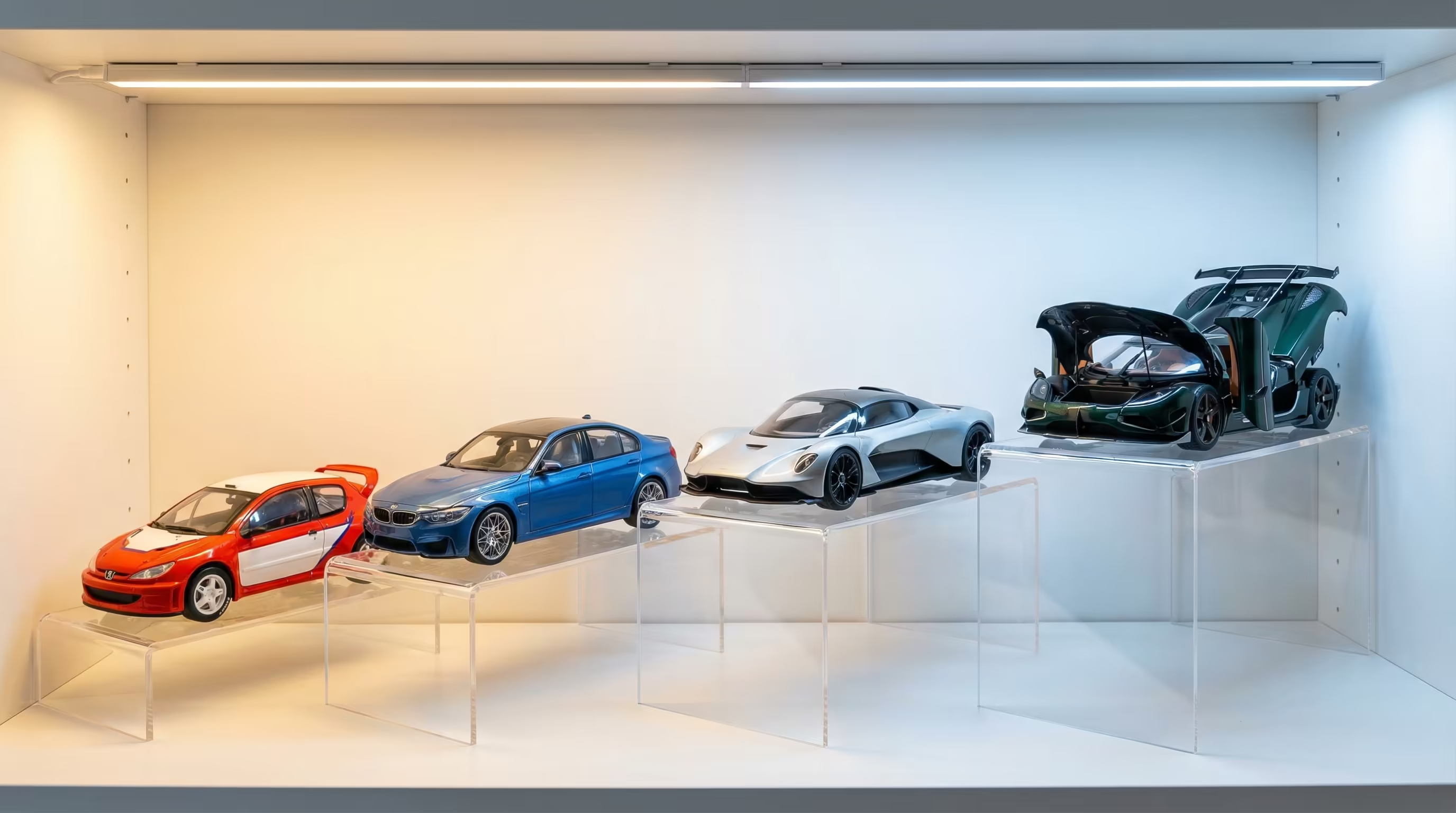
Material’s only part of the story. Within each category, certain brands consistently outperform others in accuracy, finish quality, and value for money. For a deeper look at how manufacturers compare across scales and price tiers, see our complete brand tier ranking. The table below summarises the leading names per material at 1:18 scale.
| Material | Brand | Typical 1:18 Price (GBP) | Known Strengths | Opening Parts |
|---|---|---|---|---|
| Diecast | Minichamps | ÂŁ79 – ÂŁ110 | F1 cars, precision casting, wide catalogue | Yes |
| Diecast | Norev | ÂŁ55 – ÂŁ90 | European road cars, value tier | Yes |
| Diecast | Solido | ÂŁ40 – ÂŁ65 | French classics, accessible pricing | Yes |
| Diecast | Kyosho | ÂŁ110 – ÂŁ180 | Japanese marques, exceptional interior detail | Yes |
| Diecast | CMC | ÂŁ280 – ÂŁ600 | Pre-war classics, museum grade | Yes |
| Resin | GT Spirit | ÂŁ55 – ÂŁ95 | Modern supercars, tight panel lines | No (sealed) |
| Resin | OttOmobile | ÂŁ65 – ÂŁ110 | French and German classics, exterior accuracy | No (sealed) |
| Resin | Almost Real | ÂŁ90 – ÂŁ140 | Modern performance cars, hand-painted finish | No (sealed) |
| Composite | AUTOart | ÂŁ79 – ÂŁ160 | ABS body sharpness, diecast interior, opening parts | Yes |
Choosing the Right Material for Your Collection
The right material depends on how you actually collect and what the model will be doing once it’s on your shelf. There’s no universally superior option, and some collectors maintain sections of both. Before working through the decision, it’s worth reading our beginner’s guide to starting a collection if you’re still getting to grips with scale and brand fundamentals.
Choose Diecast If
From what we see across our customer base, diecast suits you best if opening features are part of how you display or interact with your models. It’s also the right choice if you want a wide brand ecosystem with affordable entry points, or if you collect a subject category such as Formula 1 where diecast dominates the market. The physical weight and metal feel matter to many collectors, and no resin or composite model matches a top-tier CMC or Kyosho for that quality of tactile presence. Does heft matter to you? For many collectors we’ve spoken to, it genuinely does. Budget-conscious collectors will also find that diecast offers the most competitive pricing at 1:43 and 1:64 scale, where resin barely participates.
Choose Resin If
Resin is the better call if exterior accuracy matters more to you than opening parts. For modern supercars, limited-production vehicles, or cars where the bodywork is the main event, brands like GT Spirit and OttOmobile deliver panel-line sharpness that competing diecast releases often don’t match. Resin also dominates licensed limited editions, where manufacturer approval is tied to exterior perfection rather than functional features. If you display models closed in a case and photograph them rather than handling them frequently, sealed resin construction’ll serve you well. Prices at 1:18 scale are broadly comparable with quality diecast, so this is a choice of priorities rather than budget.
Choose Composite If
The AUTOart composite line is the logical choice if you want the sharp panel gaps associated with resin construction but need opening parts. It suits collectors who found AUTOart’s older diecast releases too prone to zinc pest issues, or who want the best-case scenario for body accuracy combined with a functional model. Expect to pay at the top of the diecast price bracket for recent composite releases. We’ve seen that approach work particularly well for collectors who split their focus between racing heritage models and modern supercar subjects. If AUTOart covers your subject car, it’s worth checking whether they’ve got a current composite version before settling on a diecast alternative.
Advanced: Understanding Material Degradation
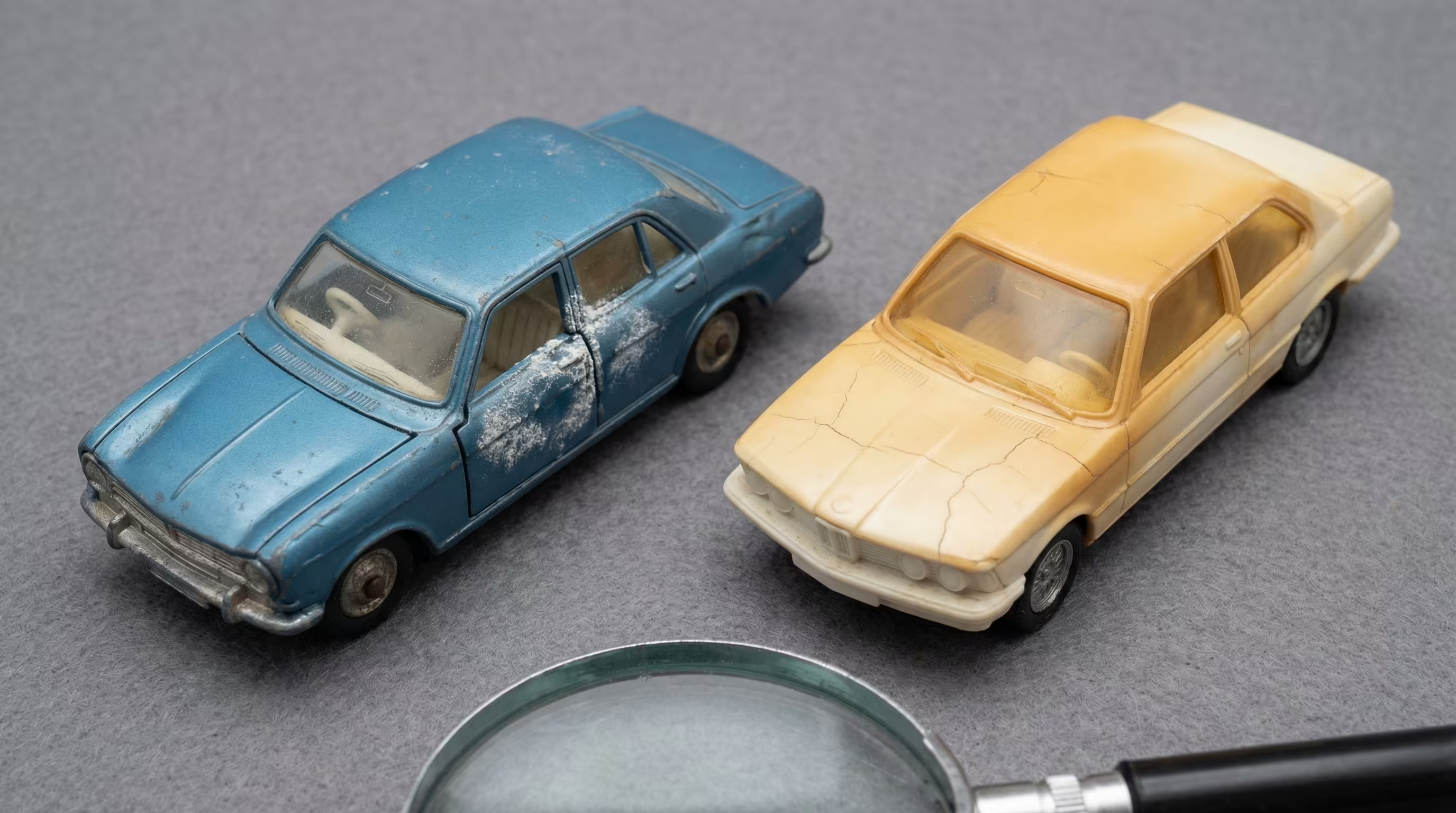
Most collectors encounter degradation eventually, and knowing what to look for in advance is worth it. The threat profiles for diecast and resin are quite different, and neither is entirely immune. For a detailed breakdown of protective strategies, see our care and display guide.
Zinc Pest in Diecast
Zinc pest is the most dramatic failure mode in the diecast world. It’s not a common occurrence in modern collections, but it’s real. It occurs when impurities in zamak alloy react over decades, causing the metal to swell, bubble, and eventually crumble. DiecastXchange notes that the shift to 99.99% pure zinc, which began seriously around 1929, largely solved the problem for commercially manufactured models made from that era onwards. (DiecastXchange Zinc Pest Research) Humidity above 65% accelerates degradation in susceptible pieces. Practical prevention means displaying models in a cool, controlled environment and avoiding damp storage spaces. Vintage models from the 1950s and 1960s carry the highest risk; models from reputable brands produced since the 1970s are generally stable.
Resin Aging: UV, Glazing, and Brittleness
Resin models age differently. The polyurethane body’s stable over long periods, but the clear acetate-effect glazing used for windows is fragile and UV-sensitive. DiecastXchange describes this glazing as thinner and more delicate than the window material in diecast models, and direct sunlight will yellow it over time. (DiecastXchange Resin Construction Analysis) The body itself can yellow if unpainted surfaces are exposed to UV, and chips or cracks in the paint are harder to repair on resin than on diecast because filler adhesion’s different between the materials. Keeping resin models out of direct sunlight and handling them by the base rather than the body reduces the risk of both UV damage and accidental breakage.
Frequently Asked Questions
Is diecast or resin better for a first 1:18 model?
For a first 1:18 purchase, diecast’s usually the safer choice. Brands like Solido and Norev produce well-finished models in the ÂŁ40 to ÂŁ65 range (Authentic Collectables Material Guide), and the opening parts give you more to explore when the model arrives. Resin rewards experience, since you’ll appreciate the panel-line accuracy more once you’ve handled diecast for comparison. That said, if there’s a specific car you want and only GT Spirit or OttOmobile makes it in resin, start with what you want.
Can resin model cars have opening doors?
No. Resin models are always sealed construction. The moulding process produces an unbroken shell, which is precisely what enables the tight shut lines resin is known for. (Motorsport Maranello Resin Guide) Brands such as GT Spirit, OttOmobile, and Almost Real don’t produce opening features on any of their resin releases. If opening doors and bonnet are important to you, you’ll need diecast or AUTOart composite.
What is zinc pest and does it affect all diecast models?
Zinc pest’s a deterioration process where impurities in zamak alloy cause the metal to swell and crumble over time. It primarily affects models produced before the widespread adoption of 99.99% pure zinc, meaning vintage pieces from the 1950s and 1960s carry the highest risk. (DiecastXchange Zinc Pest Research) Modern diecast from established manufacturers is generally stable, though humidity above 65% accelerates any latent degradation. Dry display conditions are the best prevention.
Are AUTOart models diecast or resin?
Neither. AUTOart’s recent flagship releases are composite models, using ABS plastic bodies with diecast metal interiors. (DiecastSociety Composite Technology Review) The composite construction addresses zinc pest and air bubble problems found in all-diecast builds, while retaining opening features that distinguish AUTOart from sealed resin brands. Look for the Composite Model label on packaging to confirm the construction type. Earlier AUTOart releases before approximately 2017 were traditional diecast. For a full breakdown of which brands lead in each material category, see our brand ranking guide.
Why are resin models sometimes more expensive than diecast?
Resin models require extensive hand-finishing at each stage. Pouring, curing, trimming, and painting can’t be automated to the degree that diecast injection and machine painting can. Limited production runs are also common with resin releases, which increases per-unit cost. (Motorsport Maranello Resin Guide) A 1:18 Almost Real or OttOmobile typically costs ÂŁ65 to ÂŁ140, comparable to Kyosho diecast. The price difference isn’t categorical between the materials; it reflects the production complexity of the individual release.
Can I repair a broken resin model?
Minor resin repairs are possible but they require care. Superglue (cyanoacrylate) bonds polyurethane effectively for clean breaks, and modelling putty can fill small chips before repainting. The challenge is matching the original factory paint precisely, which is harder on resin surfaces than on diecast. Window glazing on resin models is acetate-effect material; cracked or yellowed glazing’s extremely difficult to replace without specialist parts. For valuable models, professional restoration’s worth considering over DIY attempts.
Does scale affect which material is better?
Yes, significantly. At 1:18 scale, both diecast and resin produce genuinely impressive results, and the choice is about features versus exterior sharpness. At 1:43 scale, diecast dominates because the smaller size makes resin production economically unviable for most manufacturers. At 1:64 scale, diecast is effectively the only option. Resin is primarily a 1:18 material for high-end collectors, with some specialist producers working at 1:12 for ultra-detailed builds.
Conclusion: Making an Informed Choice
Diecast and resin model cars serve different collecting priorities, and understanding which matters to you is the point. That’s what this guide is for. Diecast gives you the physical heft of metal construction, opening features you can actually operate, and access to the widest possible range of brands, scales, and subjects. Resin gives you exterior accuracy that often surpasses diecast, sealed bodywork that presents identically every time, and access to subjects and licences that the diecast world doesn’t cover.
Composite models, specifically the AUTOart line, sit between these poles: ABS bodies for panel-line sharpness, metal internals for structure, and opening features for interactivity. They’re a compelling option if your collecting subject falls within AUTOart’s catalogue.
The market supports all three approaches. Collectors who prize interior detail and the experience of a model that opens’ll stay firmly in diecast territory. Those who focus on exterior bodywork accuracy and display a car closed will find resin equally or more satisfying. Many experienced collectors keep both, choosing the material that best suits each specific subject car rather than committing to one.
Whatever you choose, protecting your models from damage is the foundation of a long-lived collection. Temperature control, humidity management, and UV protection apply to all three materials, even if the specific vulnerabilities differ. Understand what your models are made from and store them accordingly, and they’ll last for generations.
For a long-term perspective on which materials and brands hold or grow in value, our investment and resale value analysis covers what the secondary market data shows.