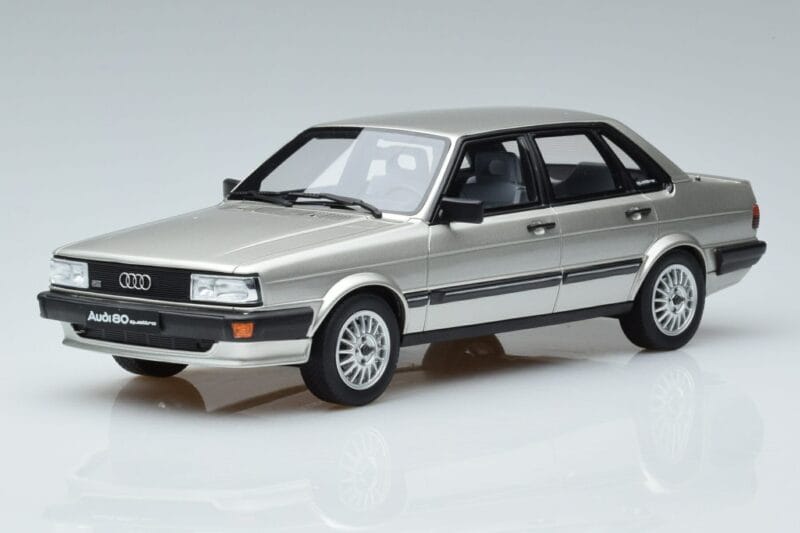
Audi 80 B2 Quattro Otto 1:18
We'll notify you once when this item is available. No spam.
You qualify for FREE shipping!
About the Audi Audi 80 B2 Quattro Otto 1:18 by Otto
Otto's 1:18 Audi 80 B2 Quattro captures the 1983 saloon that democratised quattro all-wheel-drive technology beyond the expensive Coupe that first showcased the system's rally-proven capability. This sealed resin replica presents the practical four-door bodystyle that allowed wider ownership of Audi's revolutionary drivetrain whilst maintaining the boxy Germanic design language defining 1980s Ingolstadt production. The Audi 80 Quattro 1:18 model demonstrates Otto's specialisation in nostalgic European subjects where sealed construction emphasises period design character rather than contemporary expectations for opening features and mechanical examination.
Quattro Technology Democratisation and B2 Platform Significance
The Audi 80 B2 Quattro's introduction for 1983 represented crucial commercial strategy—translating the expensive Coupe Quattro's rally-proven all-wheel-drive system into practical saloon format that middle-class buyers could actually purchase. Whilst the original Coupe Quattro launched in 1980 established the technology's competition credibility through Walter Röhrl and Hannu Mikkola's rally victories, its high price and coupe bodystyle limited sales volume. The 80 B2 Quattro brought the fundamental drivetrain technology—centre Torsen differential, permanent all-wheel drive, lockable differentials—into volume-production platform where four-door practicality and more accessible pricing expanded the system's market reach. The B2 designation identifies the second-generation 80 platform that Audi produced from 1978 through 1986, characterised by angular three-box design reflecting period Germanic styling philosophy prioritising functional efficiency over visual drama. This Otto Audi 80 B2 replica captures that distinctive 1980s character—simple rectangular forms, narrow pillars, generous glass area creating visibility modern designs sacrifice for styling drama. The 80 Quattro proved that permanent all-wheel drive delivered tangible safety and performance benefits in normal road conditions beyond motorsport applications—winter traction, wet weather stability, improved acceleration from standing starts all demonstrated practical advantage over conventional front-drive contemporaries. Audi's decision to extend quattro technology down-market through the 80 platform established all-wheel drive as brand signature that continues today, where quattro badging appears across most model ranges as fundamental Audi identity rather than expensive performance option.
Otto's Nostalgic Focus and Sealed Resin Philosophy
Otto Mobile's manufacturer identity centres on documenting nostalgic European cars typically overlooked by mainstream diecast producers and too humble for premium resin specialists. The Audi 80 B2 Quattro exemplifies this positioning—a historically significant model that established technology defining Audi's brand identity, yet lacking the exotic appeal or racing pedigree that attracts attention from manufacturers like BBR or Spark. Otto's sealed resin construction methodology prioritises overall presentation and period design character rather than feature count or mechanical examination—collectors seeking 1980s Audi documentation value capturing the B2's boxy proportions and simple surfacing over opening bonnet revealing modest four-cylinder engine. The sealed approach allows Otto to achieve clean panel alignment and period-correct surface quality at moderate pricing between mass-market diecast and ultra-premium hand-built alternatives. This Otto Audi 80 B2 execution demonstrates the manufacturer's understanding of period design language—the simple rectangular forms, narrow chrome trim, and modest wheel designs that characterised 1980s German saloons before aerodynamic considerations and visual drama became styling priorities in subsequent decades. Collectors building Otto collections often focus on breadth across European manufacturers and eras rather than depth in single marque—Otto's catalogue spans French hot hatches, German executive saloons, British sports saloons, and Italian exotics united by nostalgic appeal and sealed resin construction methodology. The Audi 80 Quattro sits naturally in mixed 1980s displays alongside contemporaries including BMW E30 3 Series, Mercedes-Benz W124, Opel Manta, and Renault 5 Turbo documenting the decade's diverse approaches to practical performance and technological innovation.
B2 Design Language and 1980s Germanic Aesthetic
The Audi 80 B2's angular design language represents peak 1980s Germanic styling philosophy where functional efficiency dominated aesthetic considerations. Designed under Audi chief stylist Hartmut Warkuß, the B2 generation prioritised aerodynamic improvement over the rounder B1 predecessor whilst maintaining simple rectangular forms that minimised production complexity and maximised interior space efficiency. The three-box silhouette—distinct bonnet, passenger compartment, and boot sections—created maximum practicality within compact overall dimensions, whilst narrow pillars and generous glass area provided excellent visibility that modern designs sacrifice for visual drama and structural rigidity. This Otto 1:18 Audi 80 Quattro model captures these period design characteristics—the upright glasshouse, simple surfacing without character lines or sculptural complexity, modest wheel arch shapes accommodating narrow tyres reflecting 1980s performance norms. The quattro badging and subtle wheel design variations distinguished quattro models from standard front-drive 80 variants, but Audi deliberately avoided the aggressive visual differentiation contemporary BMW M or Mercedes-AMG models employed. This understated approach reflected Audi's brand positioning emphasising technological sophistication over visual drama—the quattro system's mechanical capability spoke for itself without requiring external decoration. Collectors appreciating 1980s design often contrast the B2's honest functionality against contemporary trend toward pastiche historical styling or overwrought visual complexity. The simple forms and rational proportions that appeared conservative in period now read as refreshingly direct compared to modern designs where aerodynamic demands, pedestrian safety regulations, and styling fashion create visual complexity that sometimes obscures fundamental three-box practicality the B2 generation expressed without apology.
Quattro Heritage Documentation and Rally Homologation Context
The Audi 80 B2 Quattro's significance extends beyond practical saloon utility into Audi's motorsport heritage through rally homologation context. Whilst the 80 itself didn't compete at works level, the quattro technology it democratised derived directly from Group B rally development where Audi Sport Quattro S1 variants dominated World Rally Championship competition through mid-1980s. The 80 Quattro shared fundamental all-wheel-drive architecture with competition cars—Torsen centre differential, front and rear lockable differentials, permanent four-wheel power distribution—translating Group B technology into road-legal format that thousands of customers could purchase and experience daily. This connection between rally success and road car capability became central to Audi's brand identity, establishing technological credibility that luxury rivals Mercedes-Benz and BMW lacked during the period. Otto's choice to document the Audi 80 B2 Quattro acknowledges this rally heritage connection whilst focusing on the practical road car rather than exotic competition variants Spark or Minichamps typically replicate. Collectors building quattro technology chronologies often seek both rally competition models and road-going homologation saloons like this 80 B2, illustrating how motorsport development translated into production car benefit. The B2 platform context shows quattro system maturation—early Coupe Quattro resolved fundamental engineering challenges, the 80 proved commercial viability and practical benefit, subsequent generations including B3 80 Quattro and C3 100/200 Quattro expanded application across Audi's range. Display context often groups this Otto Audi 80 Quattro 1:18 alongside rally competition replicas from Spark or IXO showing Sport Quattro S1 or Group A 200 Quattro variants, documenting complete story from competition development through practical road car democratisation that established all-wheel drive as fundamental Audi brand identity rather than exotic performance option.