


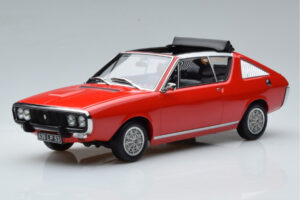



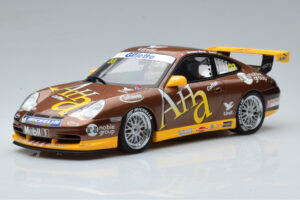
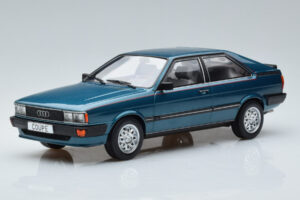



























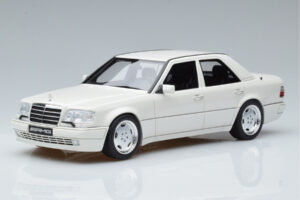

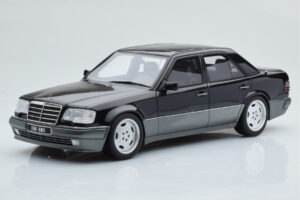

















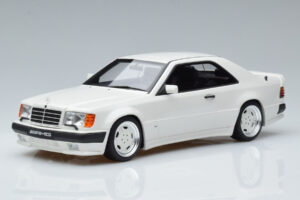

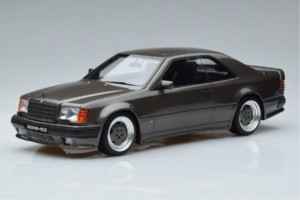








Model car manufacturers define far more than the logo on the box. They determine how a replica is engineered (opening parts or sealed), which materials are used (diecast metal or resin), the typical scales offered, and—crucially for collectors—how faithfully a particular subject is interpreted. If you already know you prefer the feel of a weighty 1:18 diecast with working hinges, or the crisp, sealed-body accuracy of a resin supercar, browsing by manufacturer is often the quickest route to models that match your expectations.
This Manufacturer hub is designed as a map of the hobby: a place to explore scale model brands, compare approaches, and jump straight to the makers that best fit your display space, budget, and collecting theme. It is also a useful way to avoid disappointment—because two replicas of the same car, in the same scale, can feel entirely different depending on who made them.Model car manufacturers as a collector’s “style” choice
Collectors often start with a marque—Jaguar, Porsche, Ferrari—then realise the manufacturer matters just as much. Some makers pursue a ‘miniature engineering’ philosophy: tight shut lines, convincing interior textures, accurately sized wheels and tyres, and (when present) opening panels that sit properly when closed. Others prioritise value and breadth, producing huge catalogues that let you cover decades of motoring history without spending premium money on every piece.
In practice, choosing between diecast model makers becomes a choice between experiences. An AUTOart-style premium diecast 1:18 can be handled and examined like a small piece of engineering, where door cards, seat patterns and engine bay detailing are a genuine part of the enjoyment. A Spark or similar sealed model, particularly in 1:43, is typically about capturing the correct stance, livery and surface detail—perfect for racing grids and era displays where accuracy and consistency matter more than moving parts.
It is also worth noting that manufacturers tend to develop “house traits”. Some paint finishes lean towards showroom gloss; others favour a slightly more realistic scale sheen. Some use delicate photo-etched parts; others mould details for durability. Once you recognise those traits, browsing by maker becomes a very efficient way to curate a coherent collection.Quality tiers in the UK market: from accessible to boutique
The UK collecting scene is broad and mature, with a healthy appetite for both affordable nostalgia and genuinely high-end replicas. Entry-level and mid-market producers—think Bburago, Maisto, Welly and similar—offer approachable pricing, often with opening features in larger scales and a wide spread of modern supercars and recognisable classics. These are ideal for expanding a display quickly, buying gifts, or picking up ‘supporting cast’ models around a more premium centrepiece.
Move into the mid-tier and you tend to see better proportional accuracy, more consistent paint application, sharper badging and finer wheels. Minichamps is a familiar name here for collectors building road-car line-ups and motorsport histories; Norev is frequently chosen for contemporary European subjects; Solido and IXO can offer strong value for themed collecting where variety matters. In 1:43, this is often the sweet spot for building breadth while keeping a convincing level of finish.
Premium and specialist names—AUTOart, Kyosho, CMC and others—are where the engineering and materials start to feel ‘serious’. Shut lines tighten, interiors gain depth and texture, and details that are merely suggested at lower tiers become properly defined. For classic motorsport and pre-war to mid-century subjects, a brand like CMC can feel almost like a small museum exhibit, with wire wheels and period hardware rendered to a standard that rewards close inspection.
At the boutique end, resin specialists and ultra-premium houses focus on accuracy, surface fidelity and limited production. BBR and Looksmart are well known for modern Italian exotica; MR Collection and Make Up also sit in this sphere. In the UK, Amalgam occupies a particular corner of the market for collectors who treat a handful of statement pieces as the centre of a room rather than the contents of a cabinet. The point of this tier isn’t that it is “better for everyone”—it is that it serves a different collecting philosophy: fewer models, each with a stronger sense of finality.
British heritage brands and UK-focused makers also matter. Corgi’s long association with British motoring culture makes it a natural draw for nostalgic collections, and Oxford Diecast has carved out a place for accessible, often UK-relevant subjects that suit dioramas and period scenes. For many collectors, pairing a handful of premium centrepieces with well-chosen accessible models produces the most satisfying overall display.Materials and construction: why “diecast vs resin” changes the feel
When collectors talk about “diecast” they often mean more than the material. A diecast model is typically a metal-bodied replica, commonly with opening doors, bonnet and boot in larger scales. The appeal is tactile: weight in the hand, the mechanical satisfaction of hinges, and the opportunity to display a car ‘opened up’ to show interior and engine detailing. Premium diecast can be genuinely impressive, but the engineering required for openings can sometimes demand slightly thicker pillars or compromise on certain edge details compared with a sealed build.
Resin models are usually sealed, built around a resin body shell with finer control of panel edges and surface shapes. Because there is no need to engineer hinges and openings, resin replicas can deliver very sharp shut lines and complex modern aerodynamics—useful for contemporary supercars where vents, splitters and diffuser elements define the design. The trade-off is that you typically cannot open anything; the model is intended to be admired as a complete exterior form. Many collectors happily mix both approaches: diecast for interactive display pieces, resin for modern shapes where stance and surfacing are everything.
Within either material, manufacturers diverge on detailing techniques. Look for photo-etched grilles and badges, clear lens elements that have depth rather than looking “flat”, convincing wheel designs, and tampos/decals that sit cleanly over curves. The best makers also pay attention to small but telling items: correct mirror shapes, properly replicated exhaust tips, and paint colours that look right under cabinet lighting (British Racing Green is notoriously hard to get “just so” at scale).Sealed versus opening models as a collecting choice
Opening features are enjoyable, but they are not automatically superior. Many motorsport collectors prefer sealed models because they preserve the correct profile and allow more consistent display across a grid. A cabinet of 1:43 Le Mans cars from a sealed specialist like Spark can look wonderfully cohesive, with accurate liveries and stance. Meanwhile, a single 1:18 premium diecast road car with opening panels can serve as a focal point, inviting closer inspection of the cabin and mechanical detailing. Thinking in terms of “display role” helps: is the model meant to be handled and explored, or to complete a line-up?How to choose a manufacturer for your collection goals
Browsing scale model brands works best when you are honest about how you collect. If you want consistency—matching base styles, similar paint sheen, and a uniform level of detailing—sticking to one or two manufacturers in a given scale can make a display feel curated rather than accidental. This is particularly effective for model runs such as Porsche 911 generations, Mercedes AMG evolution, or a timeline of modern McLaren road cars, where a consistent approach highlights the way the real vehicles changed over time.
If, however, your priority is the “best version” of each subject, mixing makers is sensible. You might choose a premium specialist for a hero car (a definitive Jaguar E-type, an Aston Martin DB5, or a centrepiece Formula 1 champion), then fill out the surrounding era with mid-tier models that still look convincing at normal viewing distance. In 1:43 especially, this approach allows you to build rich motorsport narratives—BTCC, WRC, endurance racing—without every purchase needing to be an investment piece.
Scale also interacts with manufacturer choice. Some diecast model makers are strongest in 1:18, where opening features and interior detail justify the size; others excel in 1:43, where livery accuracy and crisp proportions are the deciding factors. A few makers concentrate on 1:64 for collectors who want breadth and the fun of building large themed sets. Keeping an eye on a manufacturer’s “home scale” can save you from expecting one type of product from a brand that specialises in another.Practical checks that separate one maker from another
As you browse, look for the signals that matter in real cabinets, not just in studio photographs. Wheel and tyre proportions should look correct for the car—an area where cheaper models can stumble by using generic wheel sizes. Stance matters: a model that sits too high can ruin the character of a sports car, while an over-lowered saloon can look caricatured. Paint should be even along panel edges, and tampo printing should be sharp on small text and sponsor logos. On premium models, interior detailing—seat shape, dashboard depth, steering wheel thickness—often tells you immediately whether a maker is aiming for “toy-like” or “collector-grade”.
Packaging also plays a role for long-term collectors. Secure model mounts, protective clamshells, and well-fitted display cases reduce the risk of damage in storage and during moves—particularly important in the UK, where collections may be kept in loft rooms or studies with tighter space. Limited editions and numbered certificates can add appeal, but they are only worthwhile if the underlying model is one you genuinely want in the cabinet.Using the Manufacturer category as a browsing tool
This category is intended to make browsing quicker and more enjoyable. If you already know you prefer the feel of a particular maker—say, the engineering of a premium diecast brand, or the precise stance and livery work of a sealed specialist—start with that manufacturer and explore their range. If you are new to the hobby, use the manufacturer pages to compare approaches side by side: look at how different makers treat similar subjects, and decide which “interpretation” feels most convincing to you.
Because availability can vary over time, especially with limited runs and shifting distribution in the post-Brexit landscape, a manufacturer-led view is also a practical way to track what is currently obtainable in the UK. Some makers release in waves, particularly for motorsport seasons and modern supercars; others have steadier catalogues of evergreen classics. Returning to your preferred diecast model makers is an easy way to spot new arrivals that match your existing collection style.
Ultimately, the pleasure of collecting comes from coherence—whether that coherence is a single scale, a single marque, a single era, or simply a consistent standard of finish. Browsing by manufacturer gives you control over that coherence. Explore the makers, compare their strengths, and build a collection that feels deliberate rather than merely accumulated.